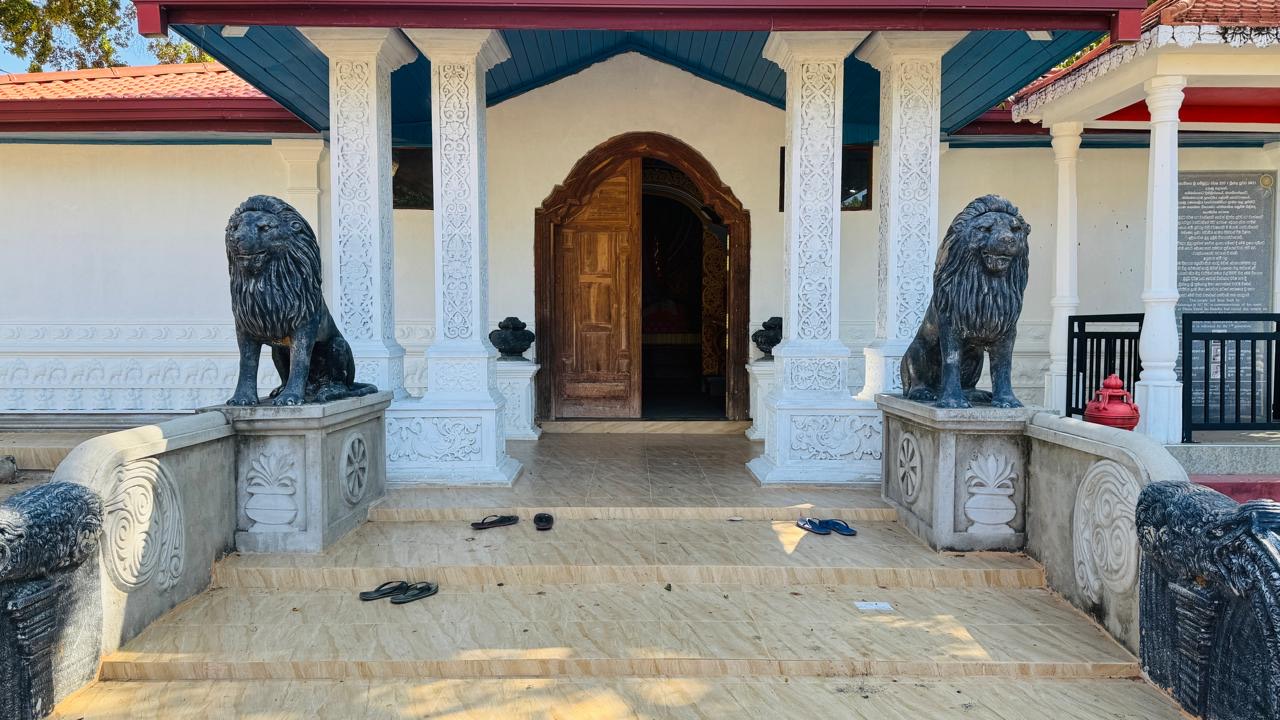
At the foot of the Budu Medura's steps, two lions cast in dark stone stand guard, one on each flank of the balustrade. In Sinhala Buddhist art the lion is a symbol of courage, nobility and protection — a reminder that the Buddha himself is called Sakyasinha, the Lion of the Sakya clan, whose teaching is the 'lion's roar'.බුදු මැදුරේ පියගැටපෙළ පාමුල, වේදිකා දෙපස කළුගලින් නෙළූ සිංහ රූප දෙකක් මුර සිටිති. සිංහල බෞද්ධ කලාවේ සිංහයා ධෛර්යයේ, උතුම්කමේ සහ ආරක්ෂාවේ සංකේතයයි — බුදුරජාණන් වහන්සේ 'ශාක්ය සිංහ' නමින් හඳුන්වන බවත්, උන්වහන්සේගේ ධර්ම දේශනාව 'සිංහනාද' යනුවෙන් හැඳින්වෙන බවත් එය සිහිපත් කරයි.Am Fuß der Treppe des Budu Medura halten zwei in dunklem Stein gehauene Löwen Wache, einer an jeder Seite der Balustrade. In der singhalesisch-buddhistischen Kunst ist der Löwe Sinnbild von Mut, Würde und Schutz — eine Erinnerung daran, dass der Buddha selbst Sakyasinha genannt wird, der Löwe des Sakya-Geschlechts, dessen Lehre der „Löwenruf“ ist.
Devotees leave their footwear at the steps and pass between the lions to enter — a quiet threshold ritual marking the passage from the outer world into the sacred space of the image house.බැතිමතුන් පාවහන් පියගැටපෙළ අසල තබා සිංහයන් අතරින් ඇතුළු වෙති — බාහිර ලෝකයෙන් බුදු මැදුරේ පූජනීය අවකාශයට පිවිසීම සනිටුහන් කරන නිහඬ චාරිත්රයකි.Die Gläubigen lassen ihr Schuhwerk an den Stufen zurück und schreiten zwischen den Löwen hindurch — ein stilles Schwellenritual, das den Übergang von der äußeren Welt in den heiligen Raum des Bildhauses markiert.