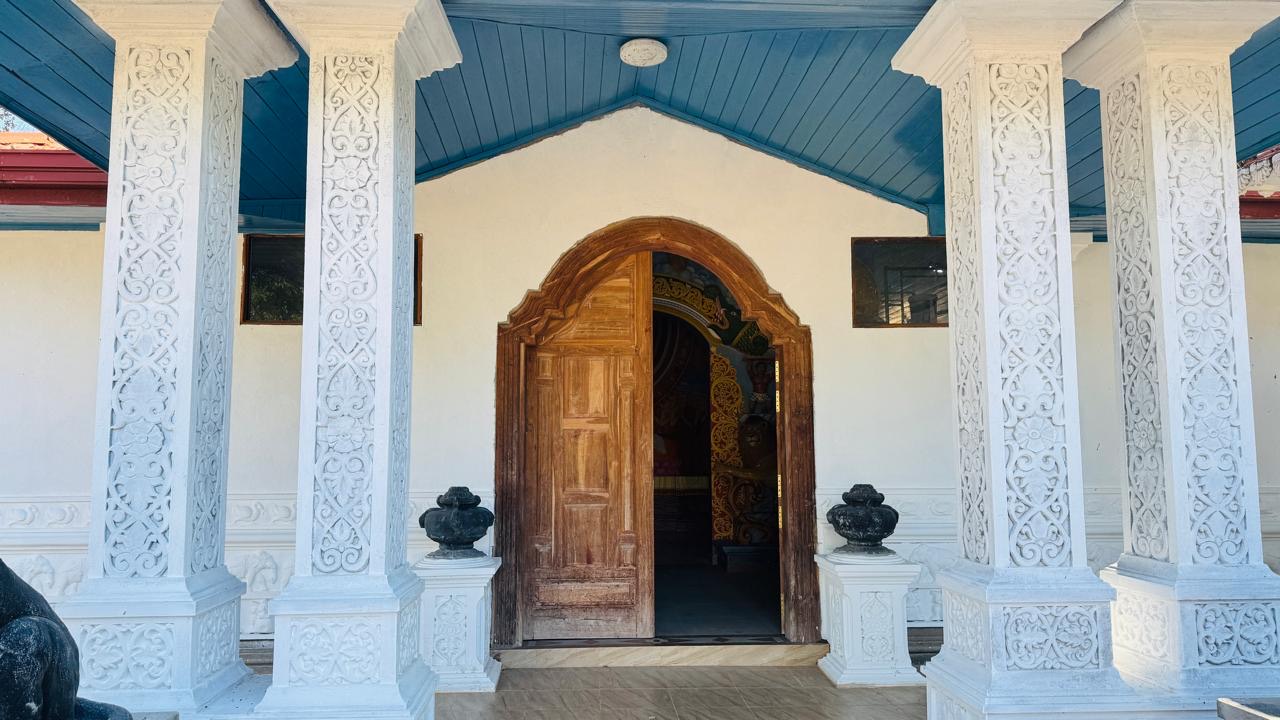
The verandah of the Budu Medura is carried on white pillars, each face carved with liyawel — the flowing vine motif of traditional Sinhala craftsmanship, in which a single creeper unfurls endlessly, symbolising continuity and the unbroken flow of life. Above, the ceiling is painted in the temple's signature blue.බුදු මැදුරේ ආලින්දය රඳවා ඇත්තේ සුදු කණු මතය. සෑම කණුවකම ලියවැල් කැටයම් — සාම්ප්රදායික සිංහල ශිල්පයේ නොනවතින වැල් රටාව — කැටයම් කර ඇති අතර, එය අඛණ්ඩතාවේ සංකේතයකි. ඉහළින් වහලය විහාරයට ආවේණික නිල් පැහැයෙන් සිතුවම් කර ඇත.Die Veranda des Budu Medura ruht auf weißen Säulen, deren Flächen mit Liyavel geschmückt sind — dem fließenden Rankenmotiv des traditionellen singhalesischen Handwerks, in dem sich eine einzige Ranke endlos entfaltet, Sinnbild der Beständigkeit und des ununterbrochenen Stroms des Lebens. Darüber ist die Decke im charakteristischen Blau des Tempels bemalt.
The arched timber doorway, framed in carved stone, opens directly onto the shrine within. Its double doors are a craft of joinery and patience — and through them, the first glimpse of the Makara Thorana and the Buddha image greets every visitor.කැටයම් ගල් රාමුවකින් වටවූ දැව දොරටුව කෙළින්ම ඇතුළත ප්රතිමා මණ්ඩපය වෙත විවෘත වේ. එහි දෙපියන් දොරටුව ශිල්පීය ඉවසීමේ නිමැවුමකි — ඒ හරහා මකර තොරණේ සහ බුදු පිළිමයේ පළමු දසුන සෑම බැතිමතෙකුම පිළිගනී.Das bogenförmige Holzportal, gefasst in behauenen Stein, öffnet sich unmittelbar zum Schrein. Seine Doppeltür ist ein Werk von Handwerkskunst und Geduld — und durch sie empfängt jeden Besucher der erste Blick auf das Makara-Torana und das Buddha-Bildnis.