The Paintings of the Image House

All the statues, murals and ornaments of the Budu Medura of Naga Maha Viharaya, in the order of the temple's own book — each with its story narrated by the temple. Choose your language in the menu; the narration follows it.

📖 From the temple's book “Vihara Geya — Life and Paintings”

🔊 Tap play to hear the story while viewing the painting.
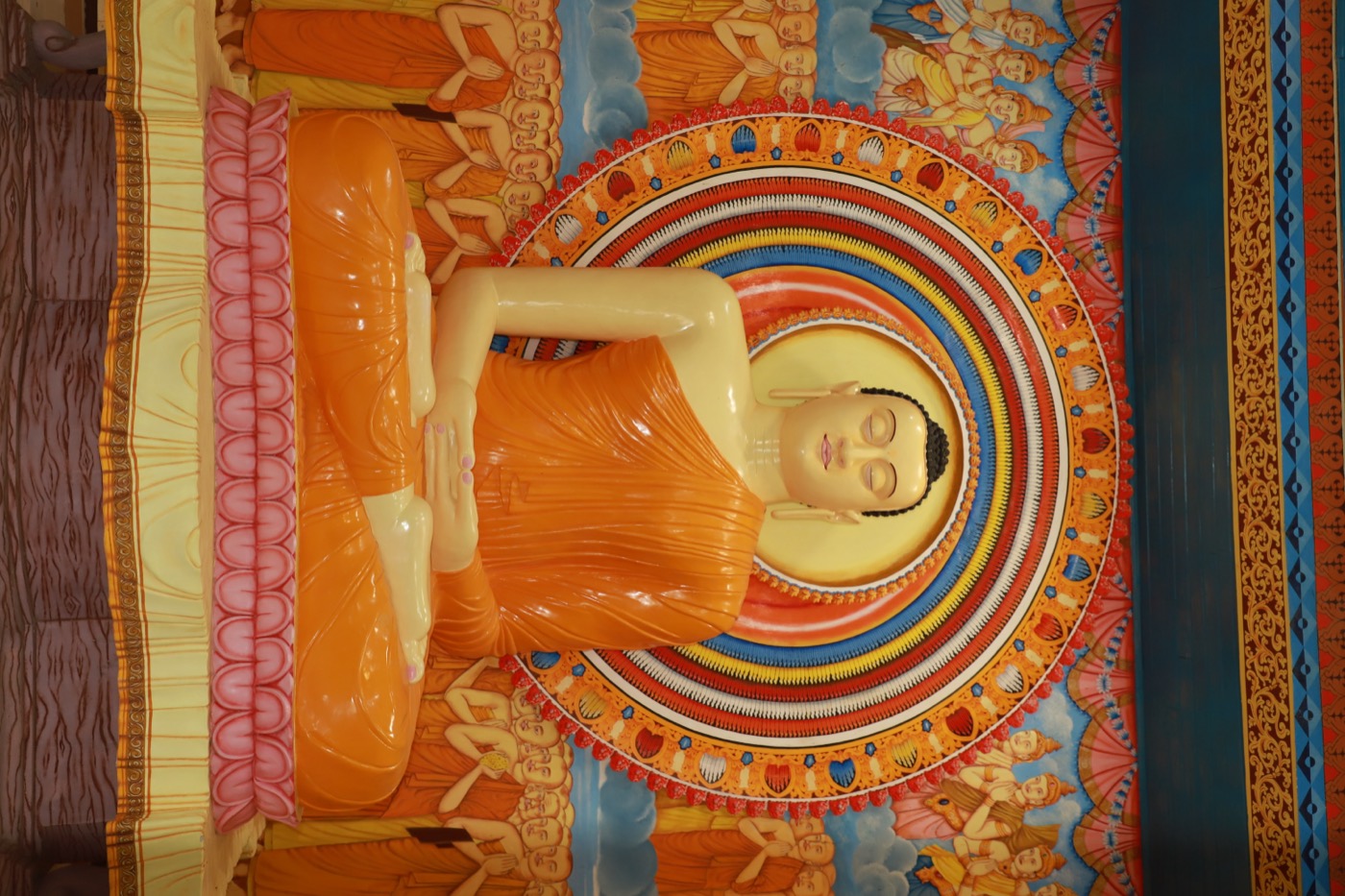
The Main Samadhi Buddha Statue

1

The Main Samadhi Buddha Statue

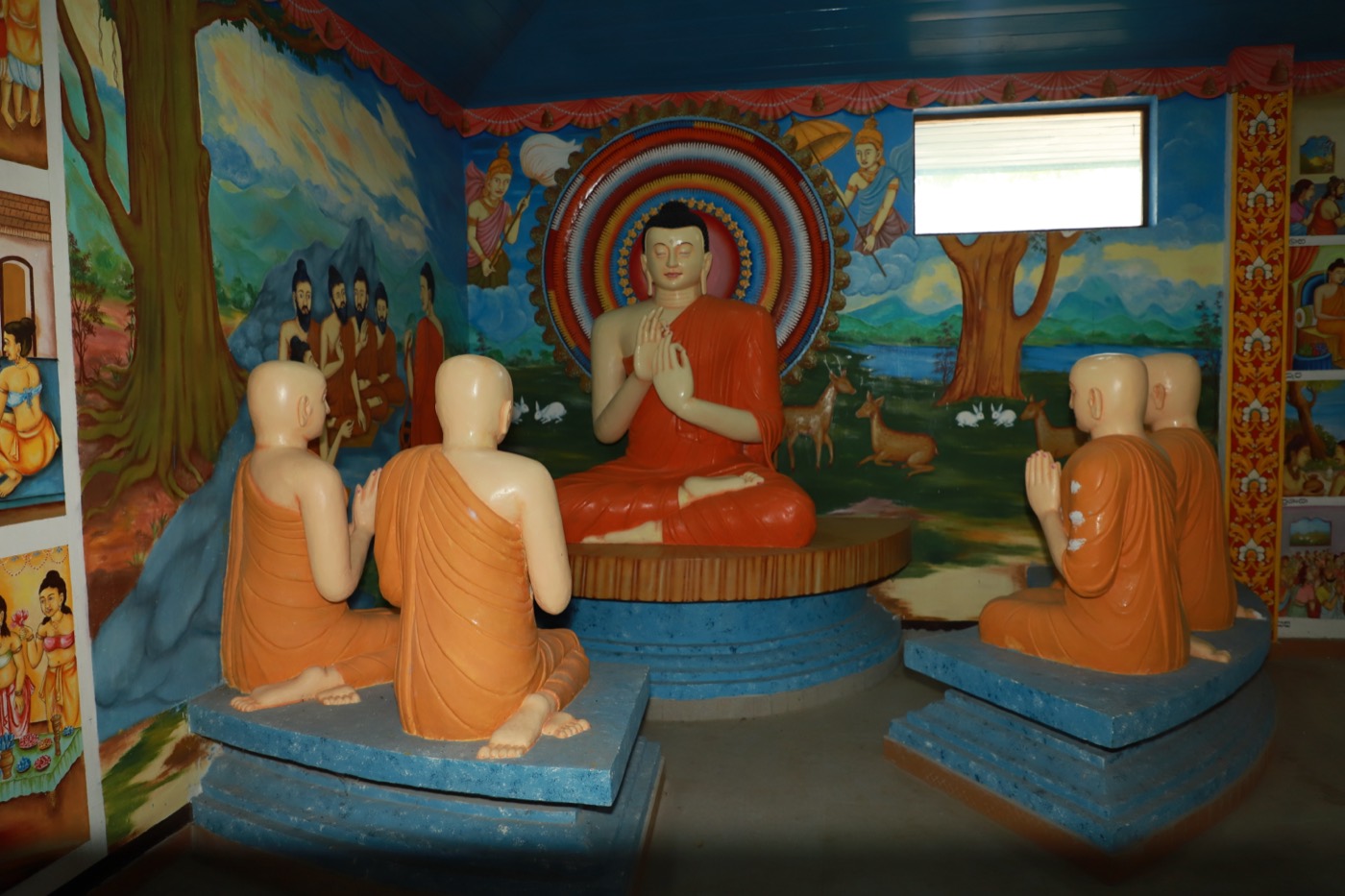
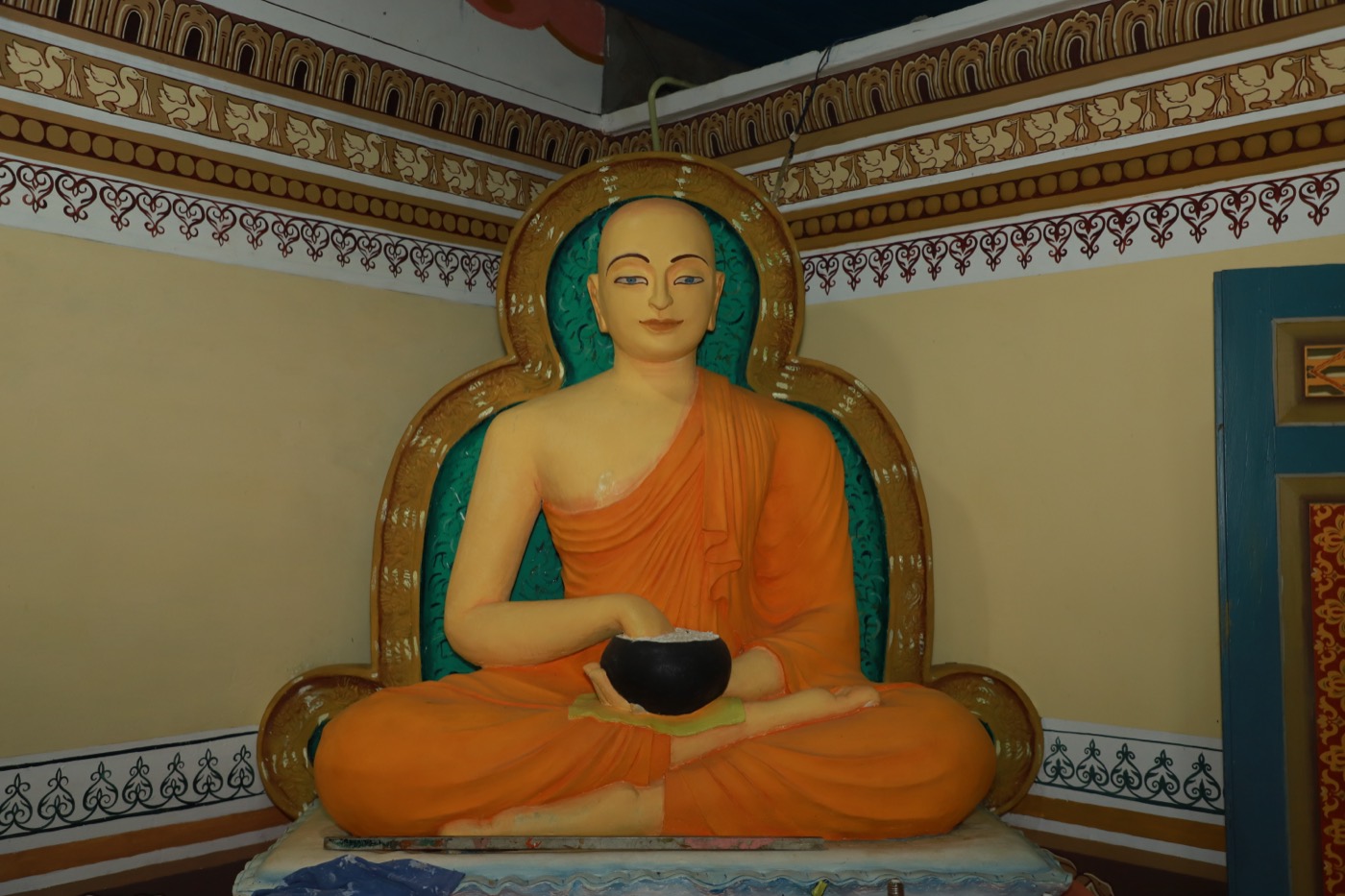
At the heart of the image house sits the main Samadhi Buddha statue. Shown in the posture of deep meditation, with hands resting in the dhyana mudra, it embodies the perfect stillness of a fully concentrated mind. The radiant halo around the figure represents the six-coloured aura of the Buddha, and this shrine is the principal place of veneration for every devotee who enters.
Arahant Maha Moggallana

2

Arahant Maha Moggallana

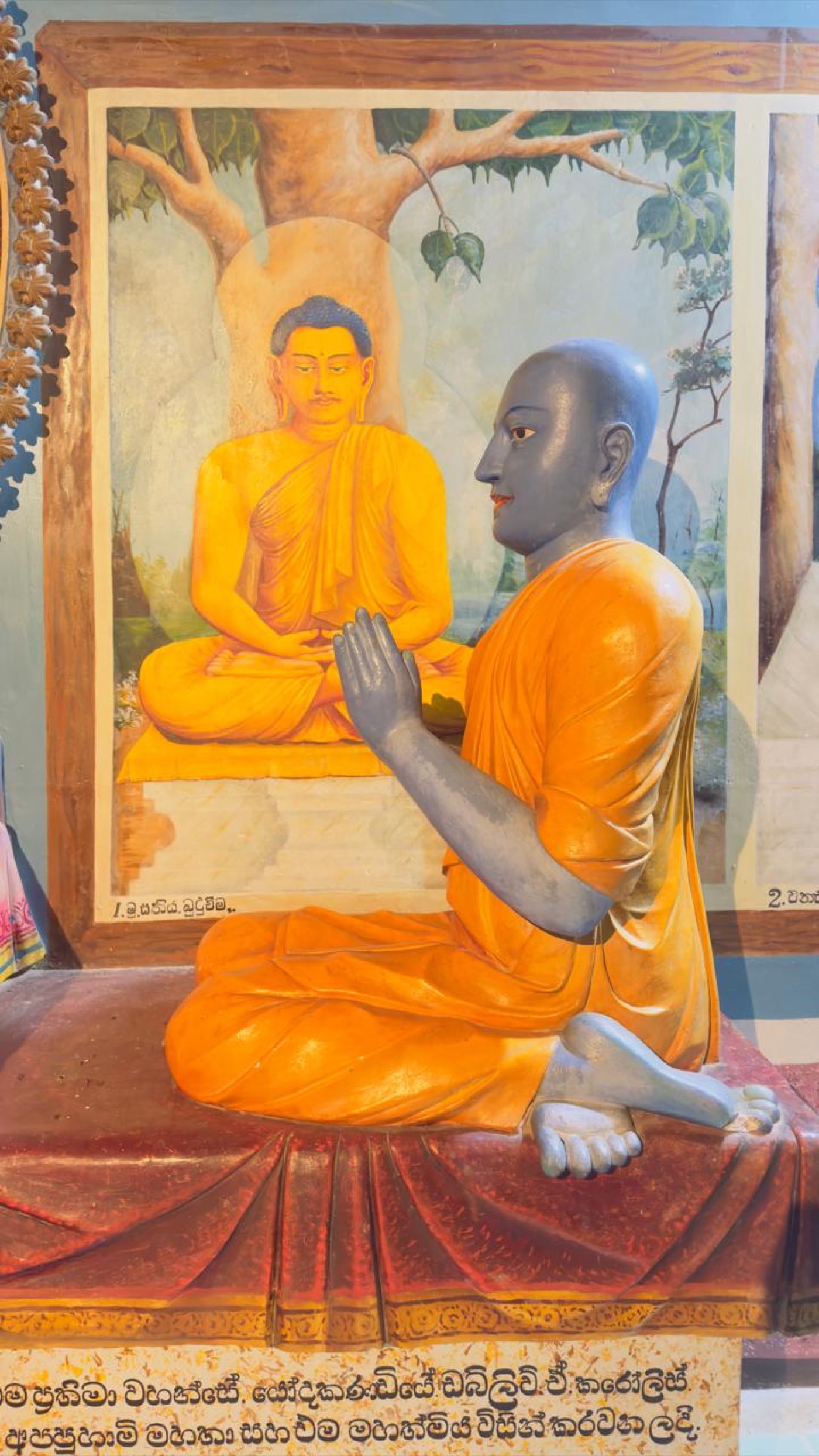
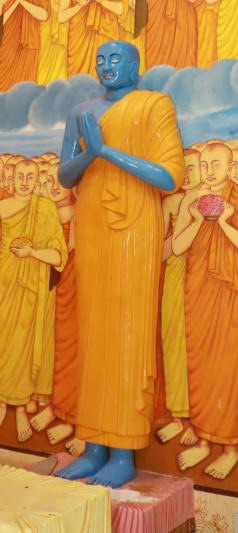
Arahant Maha Moggallana was the Buddha's chief disciple of the left, foremost among all monks in psychic power. This blue-hued statue depicts his commanding presence. His life also carries a profound lesson on the power of karma: despite his great attainments, he met his end at the hands of bandits as the ripening of a deed from a former life.

Arahant Sariputta

3

Arahant Sariputta

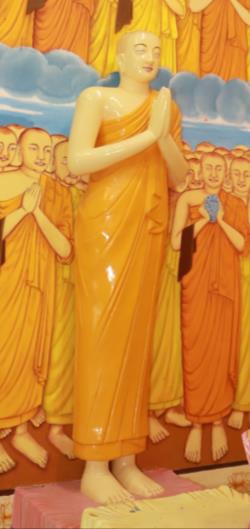
Arahant Sariputta was the Buddha's chief disciple of the right, foremost among all monks in wisdom. So skilled was he in explaining the Dhamma that he was honoured with the title 'General of the Dhamma'. He remains revered to this day as the very embodiment of wisdom in the Buddha's dispensation.

The Invitation of the Gods

4

The Invitation of the Gods

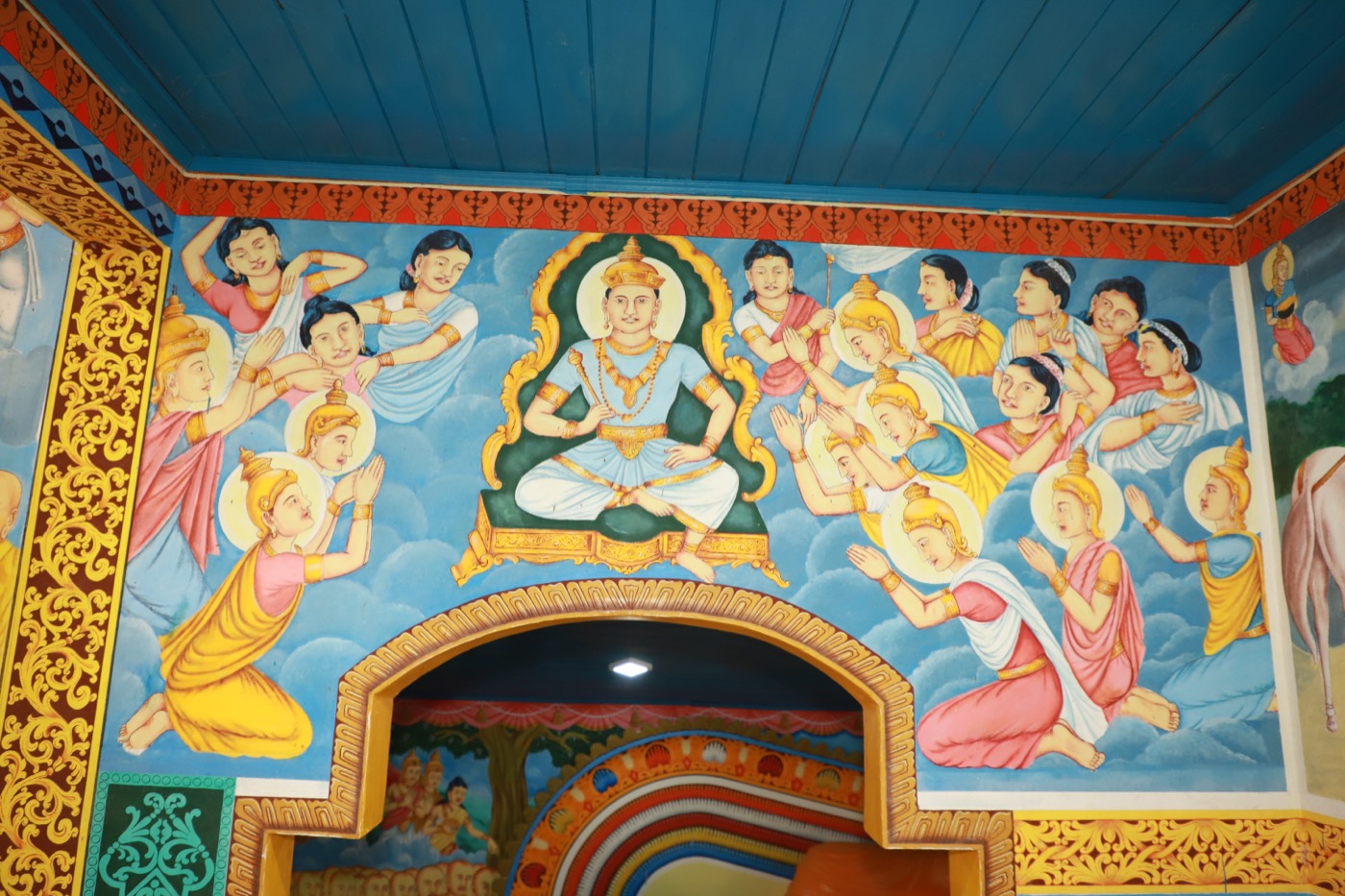
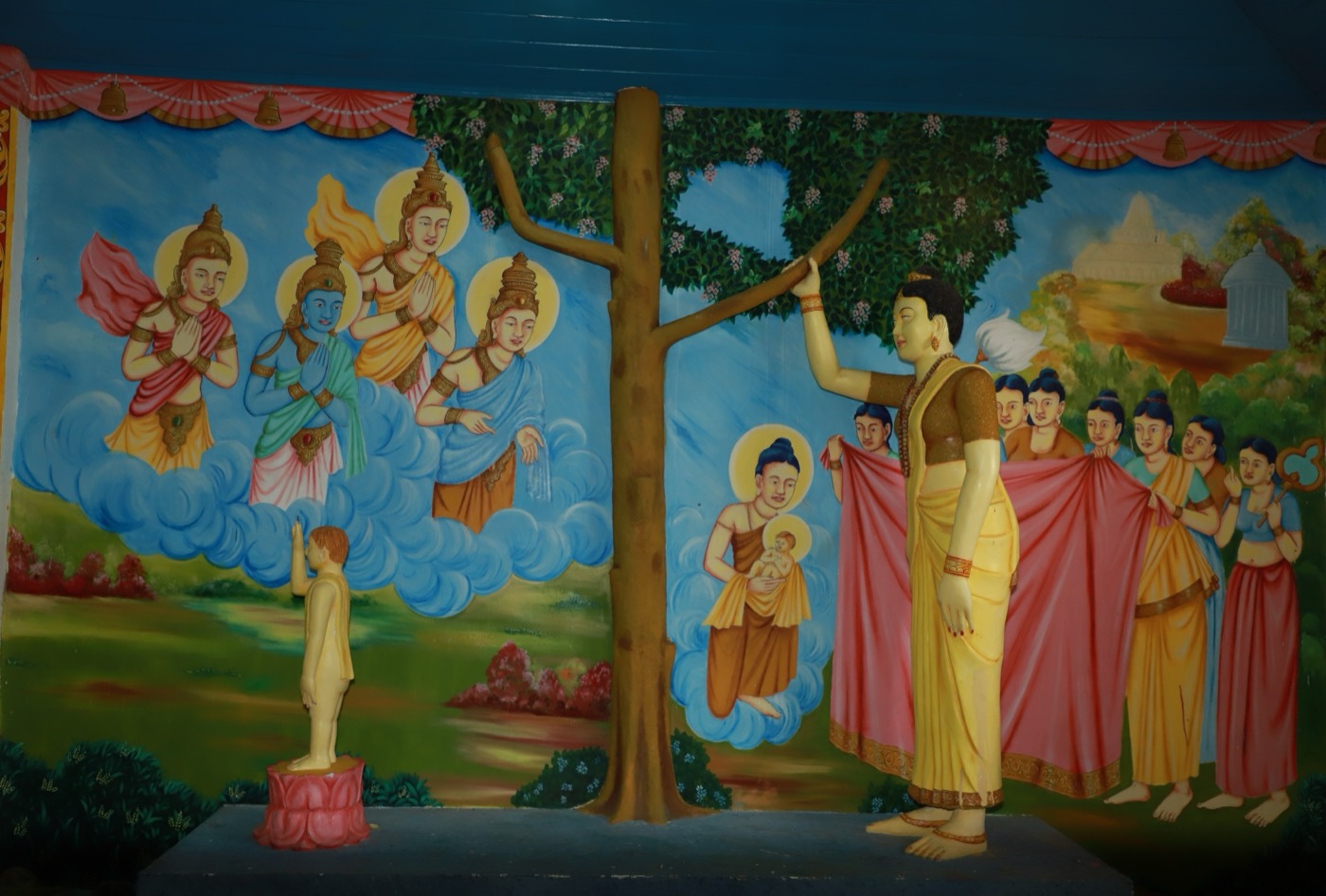
This mural shows the deities, led by Maha Brahma, approaching the Bodhisattva in the Tusita heaven, inviting him to take birth in the human world and become a fully enlightened Buddha. Before accepting, the Bodhisattva made the five great considerations — of the right time, continent, country, clan and mother — and then consented to be born.

The Great Renunciation

5

The Great Renunciation

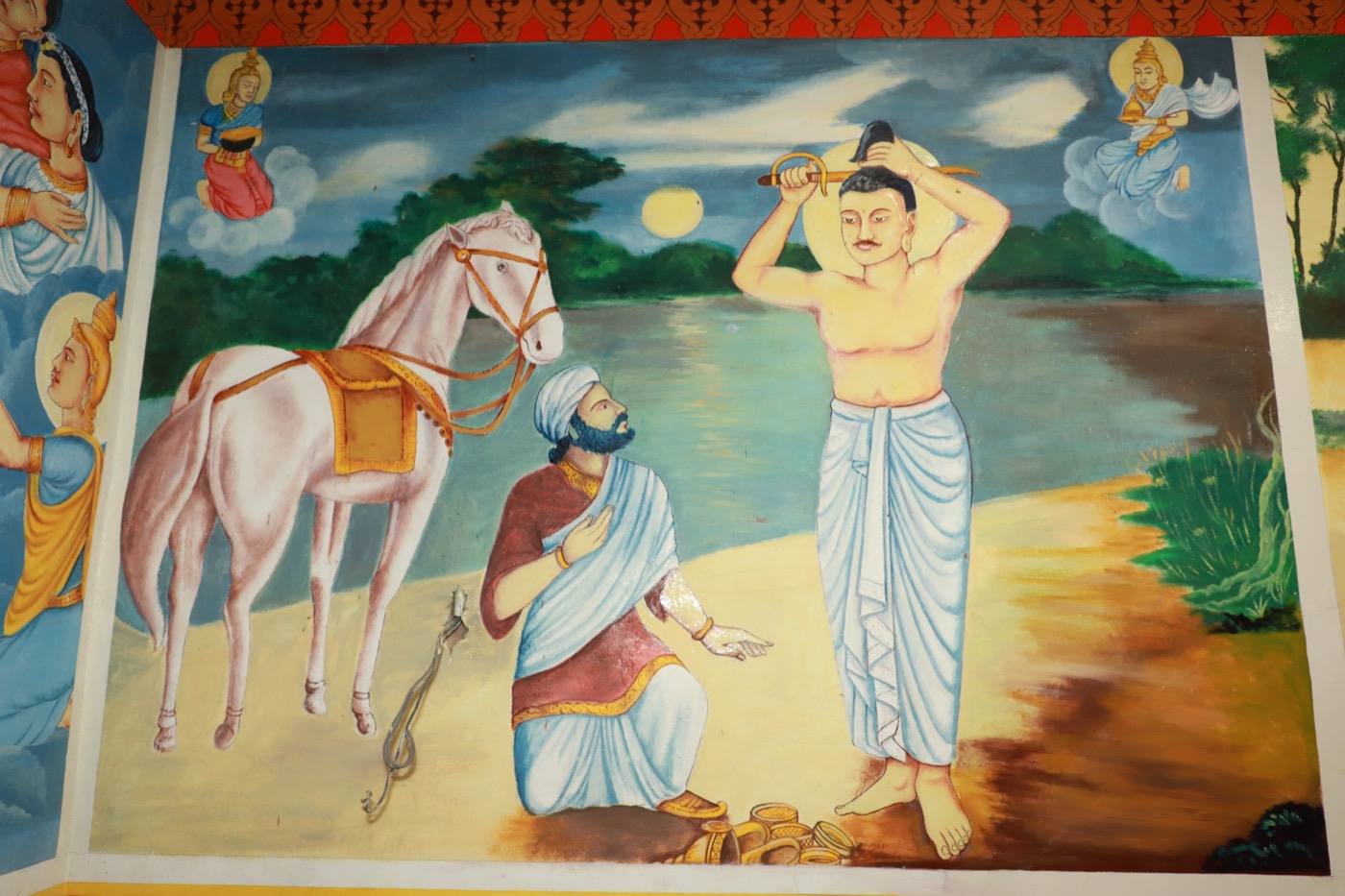
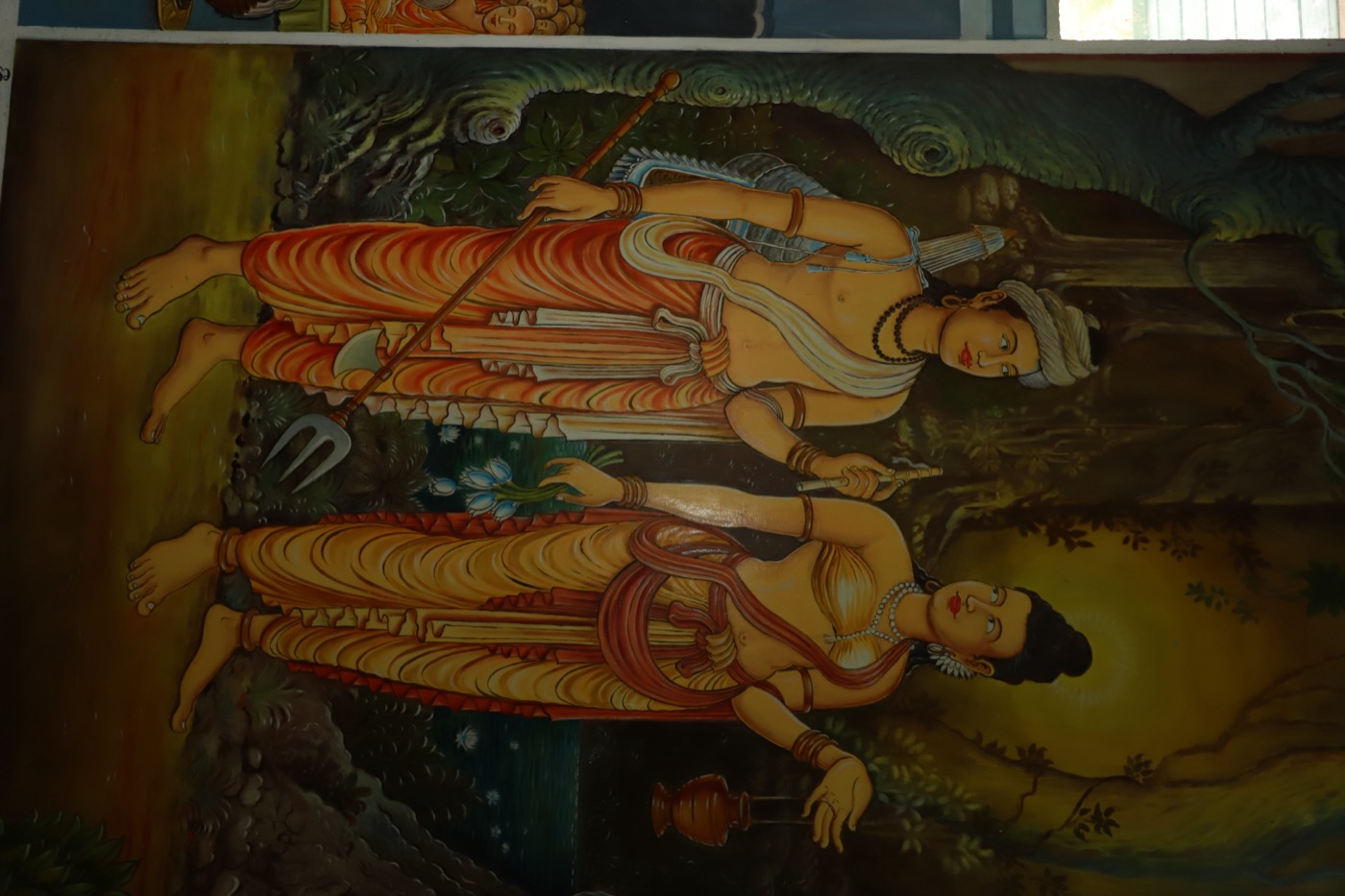
Here Prince Siddhartha leaves the palace at midnight on his horse Kanthaka, accompanied by his minister Channa, renouncing every royal comfort. On the bank of the river Anoma he cut off his hair with his sword, laid aside his princely garments, and set out as an ascetic in search of truth — a moment remembered as the noblest renunciation in history.

The Six Years of Austerities

6

The Six Years of Austerities

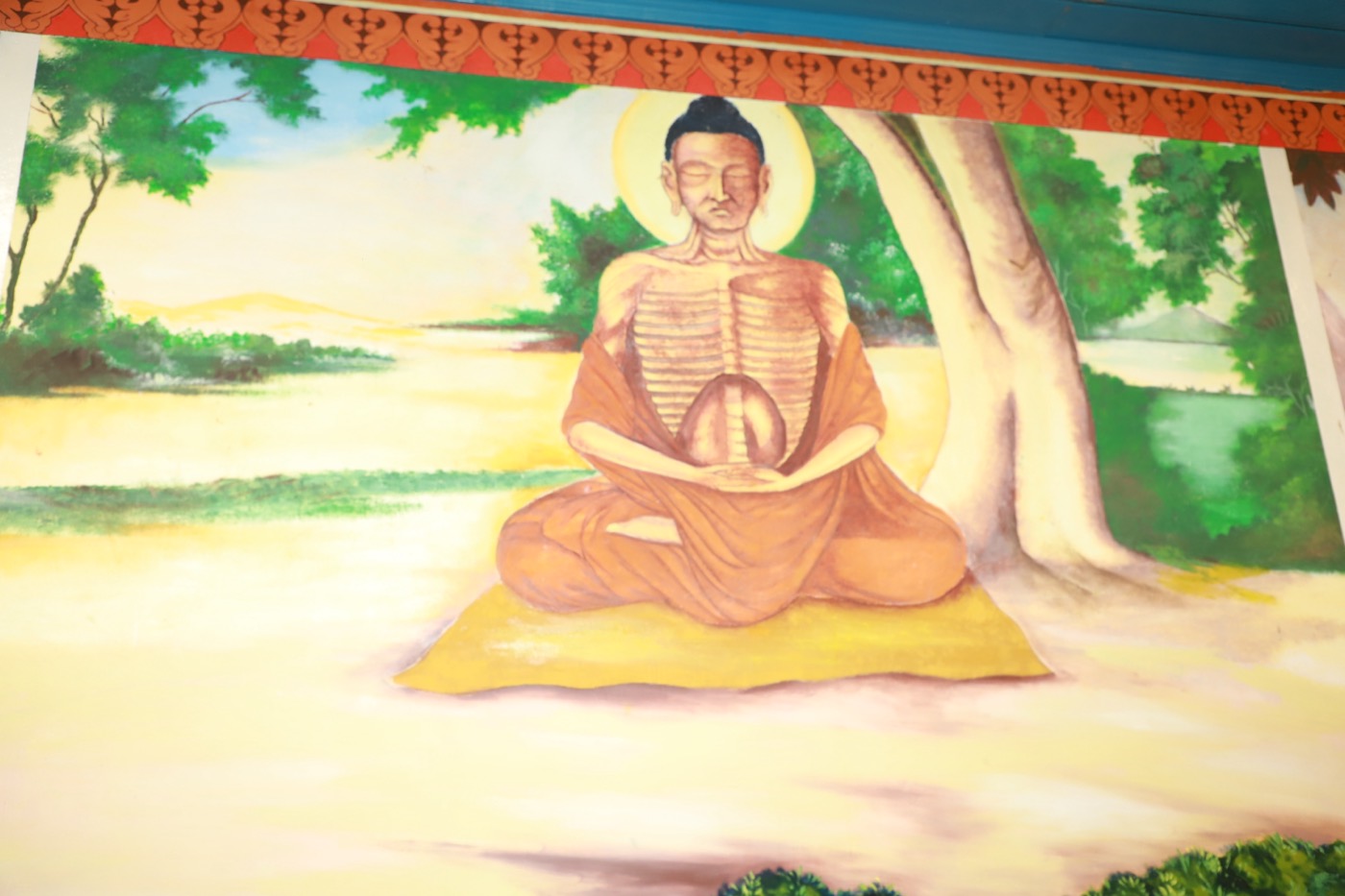
This painting shows the Bodhisattva reduced almost to a skeleton after six years of extreme austerities in search of enlightenment. Realising that tormenting the body could never lead to truth, he abandoned both extremes of indulgence and self-mortification and chose the Middle Way — which became one of the most fundamental teachings of Buddhism.

Sujata's Offering of Milk-Rice

7

Sujata's Offering of Milk-Rice

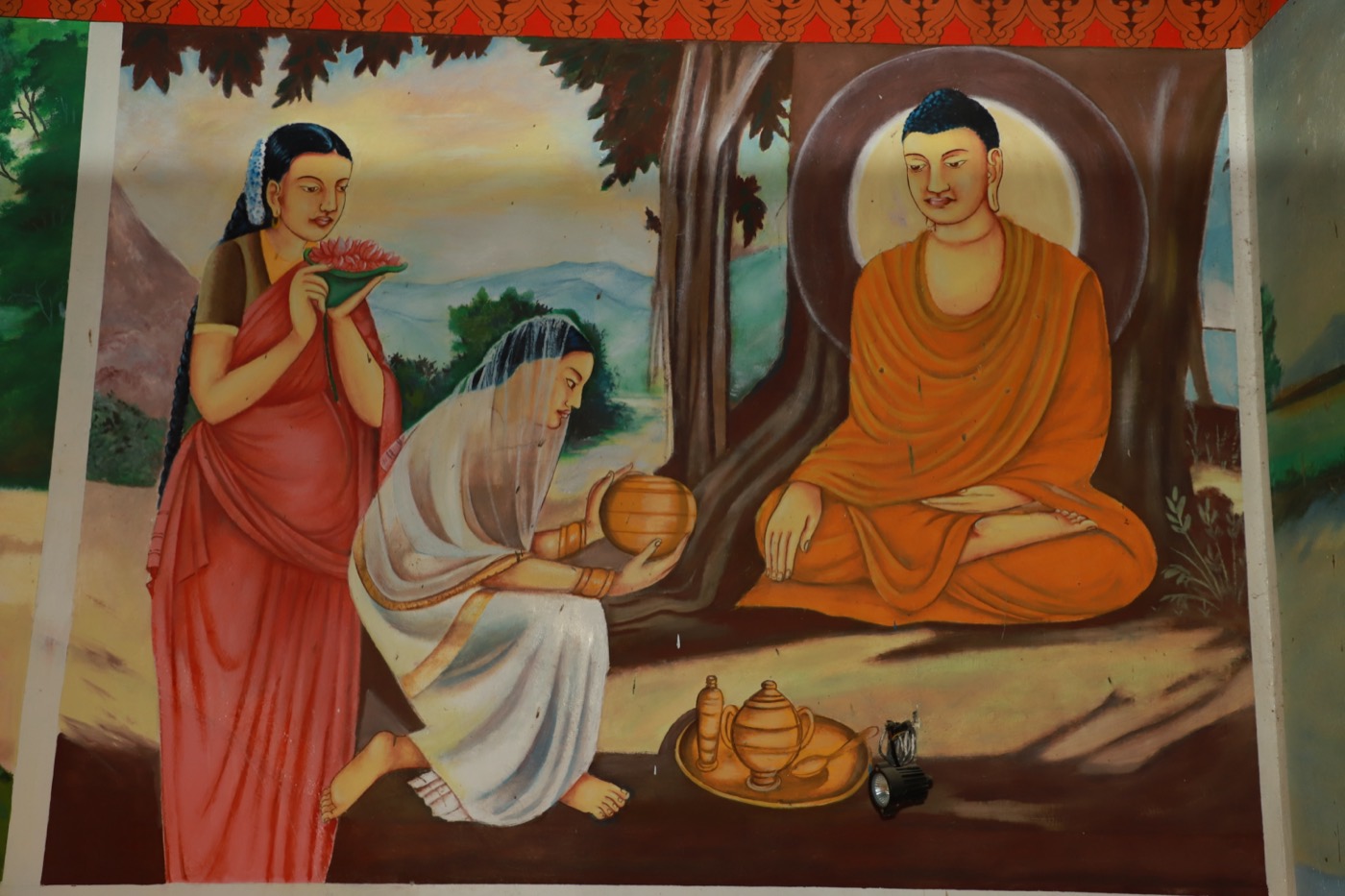
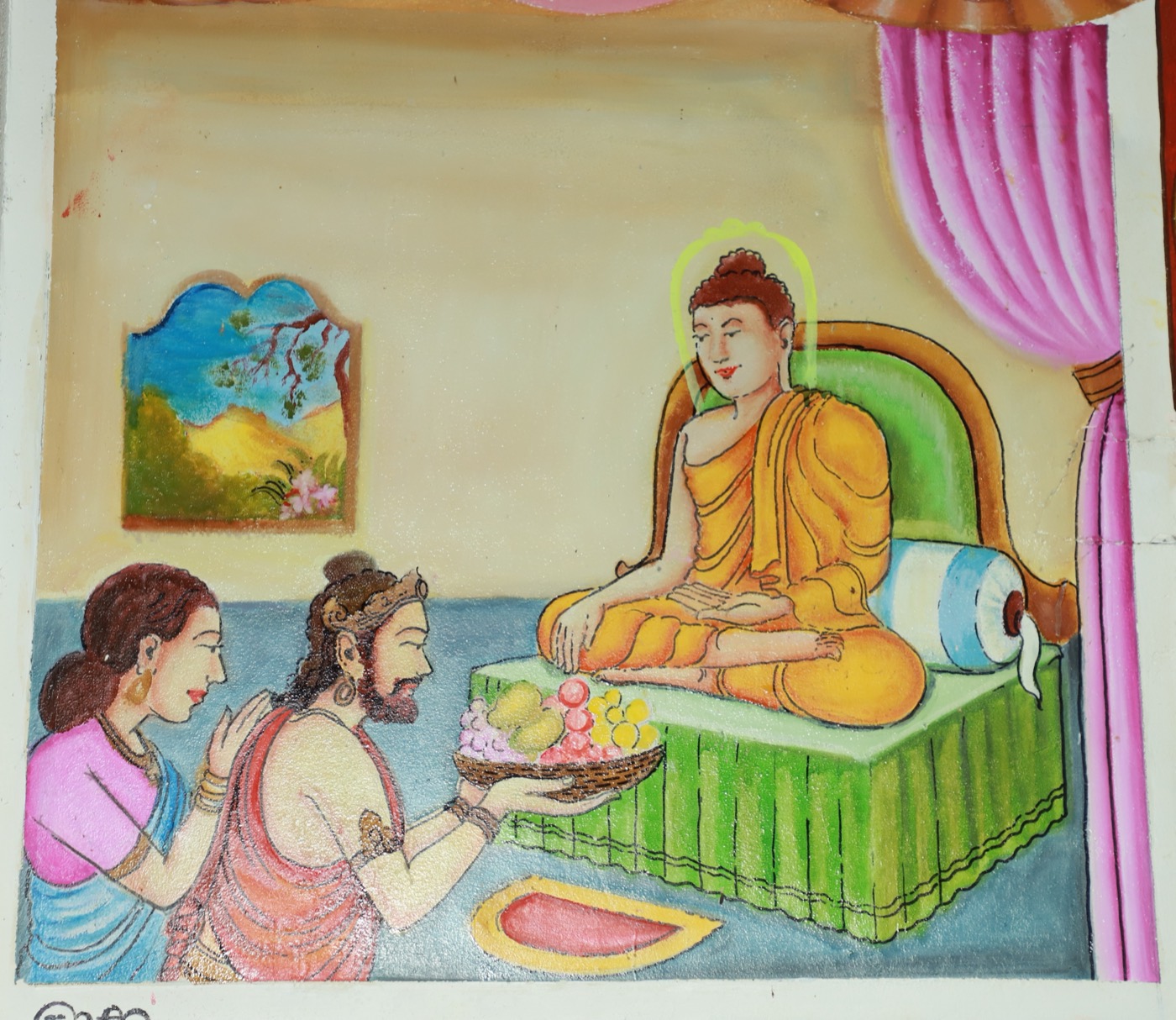
Here Sujata, daughter of a wealthy householder, offers milk-rice in a golden bowl to the Bodhisattva after he had given up his austerities. Strengthened by that meal, he seated himself beneath the Bodhi tree that very night and attained enlightenment. Sujata's offering is remembered as a decisive turning point in the life of the Buddha.
Going to the Neranjana River

8

Going to the Neranjana River

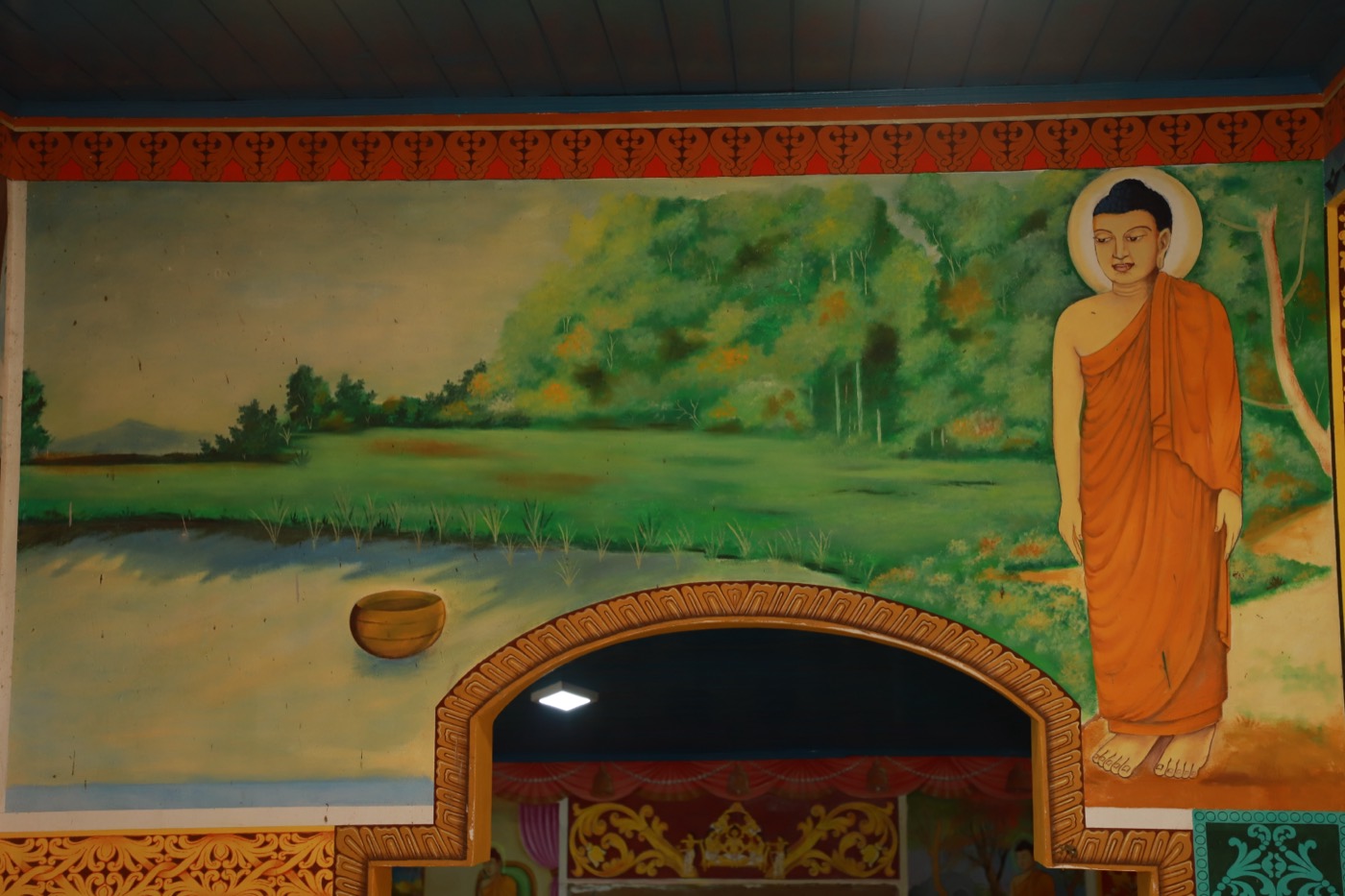
This mural shows the Bodhisattva going down to the river Neranjana on the day before his enlightenment. After bathing, he set Sujata's golden bowl upon the water with the resolve: 'If I am to become a Buddha today, may this bowl float upstream.' The bowl moved against the current — an auspicious sign foretelling his awakening.

Anathapindika the Benefactor

9

Anathapindika the Benefactor

Anathapindika, the foremost male lay supporter of the Buddha, is celebrated as the great benefactor who built the Jetavana monastery. He purchased Prince Jeta's park by covering its ground with gold coins and erected the monastery there. His name means 'feeder of the helpless', earned through his boundless generosity to the poor.

King Suddhodana

10

King Suddhodana

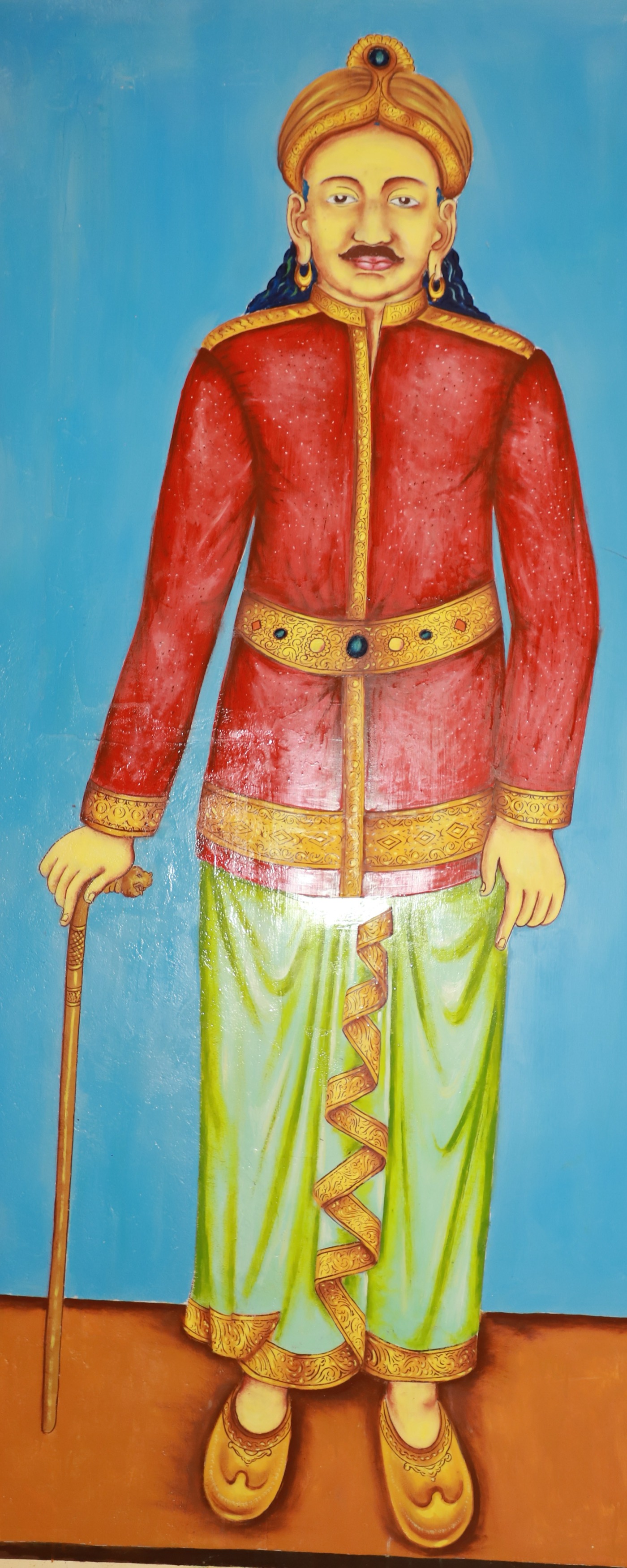
King Suddhodana, ruler of the Shakya kingdom of Kapilavastu, was the father of the Buddha. After his son attained enlightenment, the king listened to his teaching and entered the stream of liberation, and on his deathbed he attained final arahantship. His life unites a father's love with deep faith in the Dhamma.

Maha Prajapati Gotami

11

Maha Prajapati Gotami

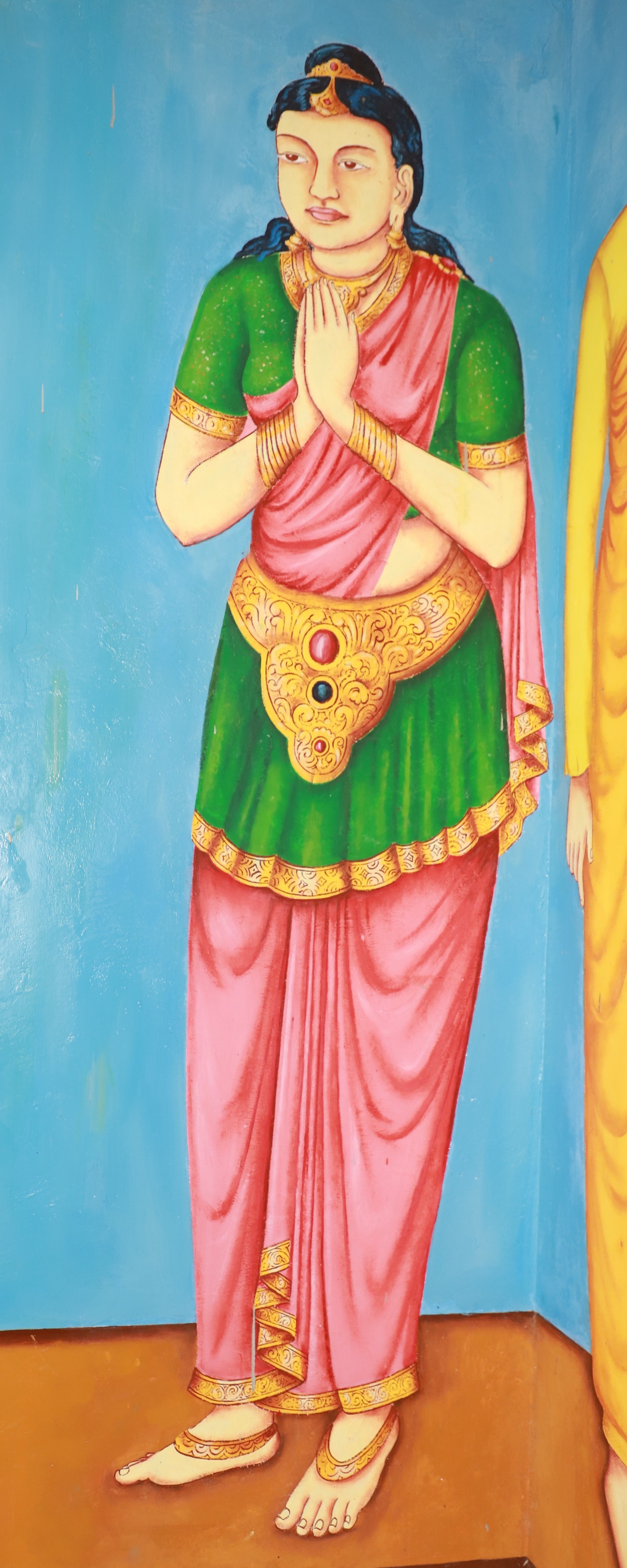
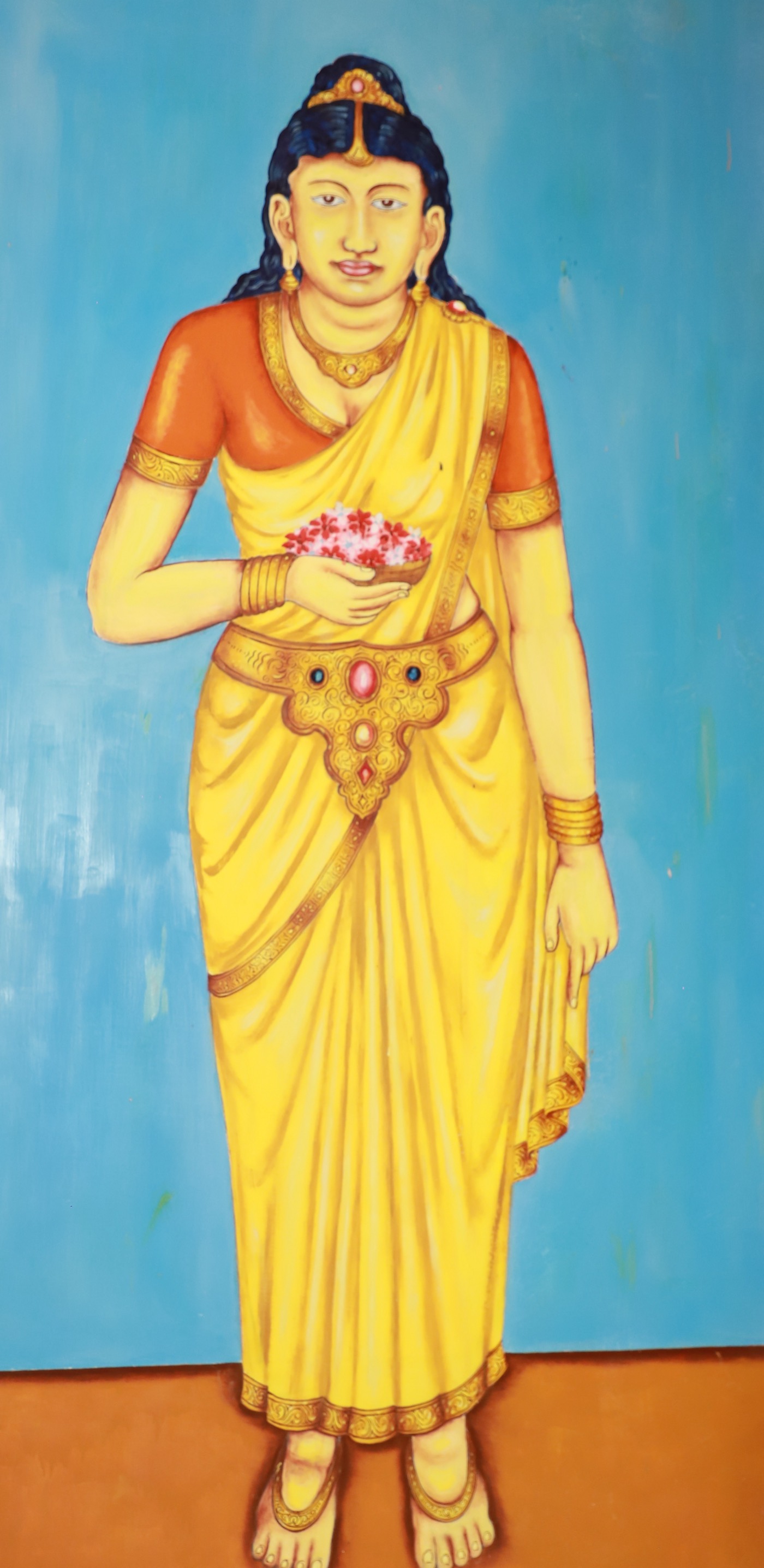
Maha Prajapati Gotami raised Prince Siddhartha as her own son after the passing of his mother, Queen Mahamaya. She later earned the honour of becoming the first bhikkhuni — the first ordained nun of the Buddha's dispensation. It was through her unshakable determination that the order of nuns came into being, and she herself attained arahantship.

Visakha the Great Benefactress

12

Visakha the Great Benefactress

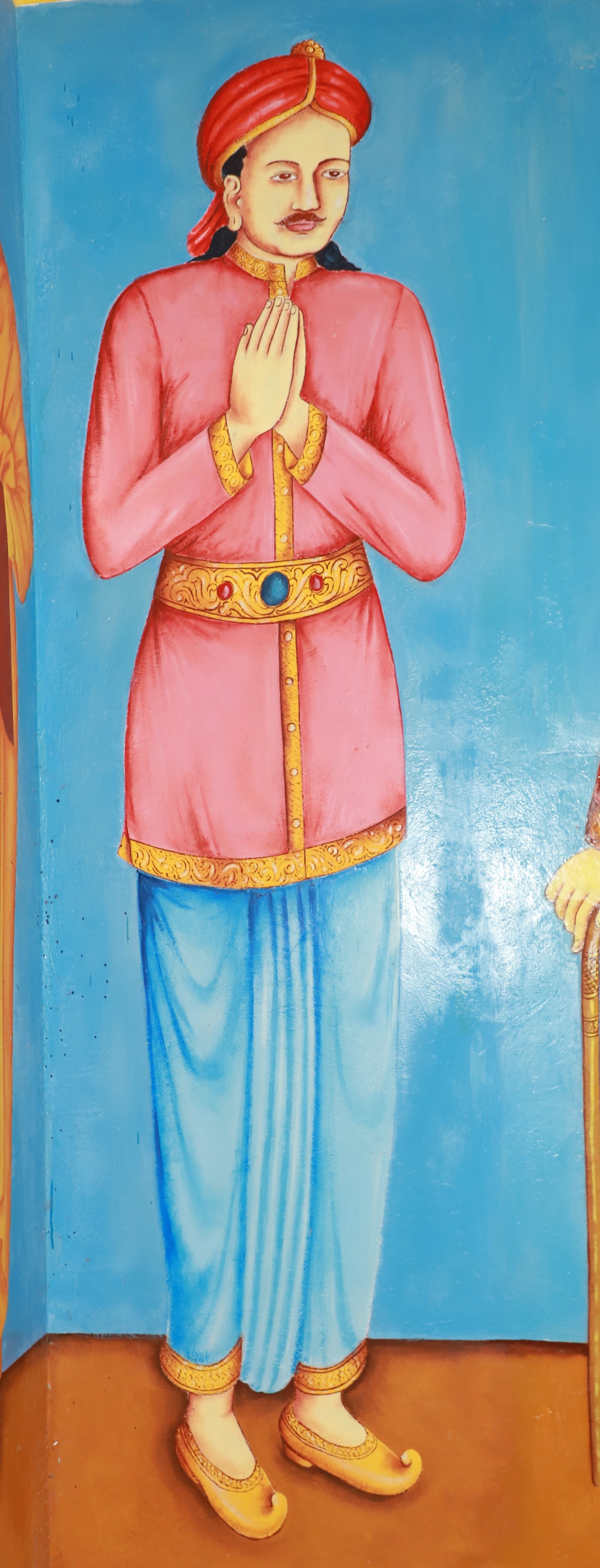
Visakha, the foremost female lay supporter of the Buddha, built and offered the great monastery known as the Migaramatupasada in the Purvarama. She attained the first stage of liberation while still a child, and to this day she is honoured throughout the Buddhist world as the noblest example of a devoted laywoman.

Tamer of Those to Be Tamed

13

Tamer of Those to Be Tamed

7 images

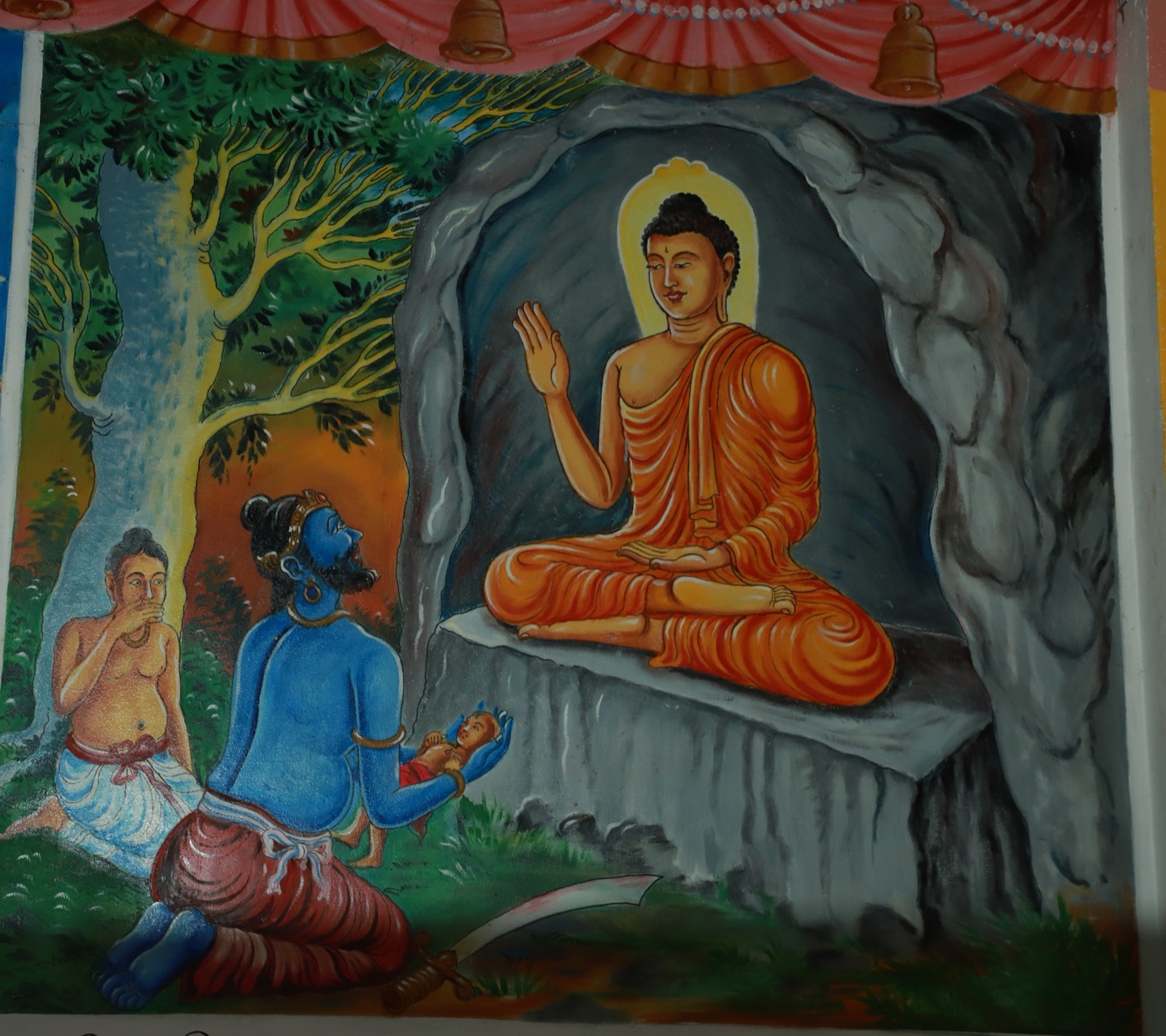
'Purisa-damma-sarathi' — tamer of those to be tamed — is one of the great epithets of the Buddha. This series of seven paintings shows how he subdued the demon Alavaka, the bandit Angulimala, the maddened elephant Nalagiri, the debater Saccaka, the serpent king Nandopananda, the deity Baka Brahma and the false accuser Chinchamanavika — never by force, but by loving-kindness and wisdom alone.

The Ten Decades of Life

14

The Ten Decades of Life

10 images

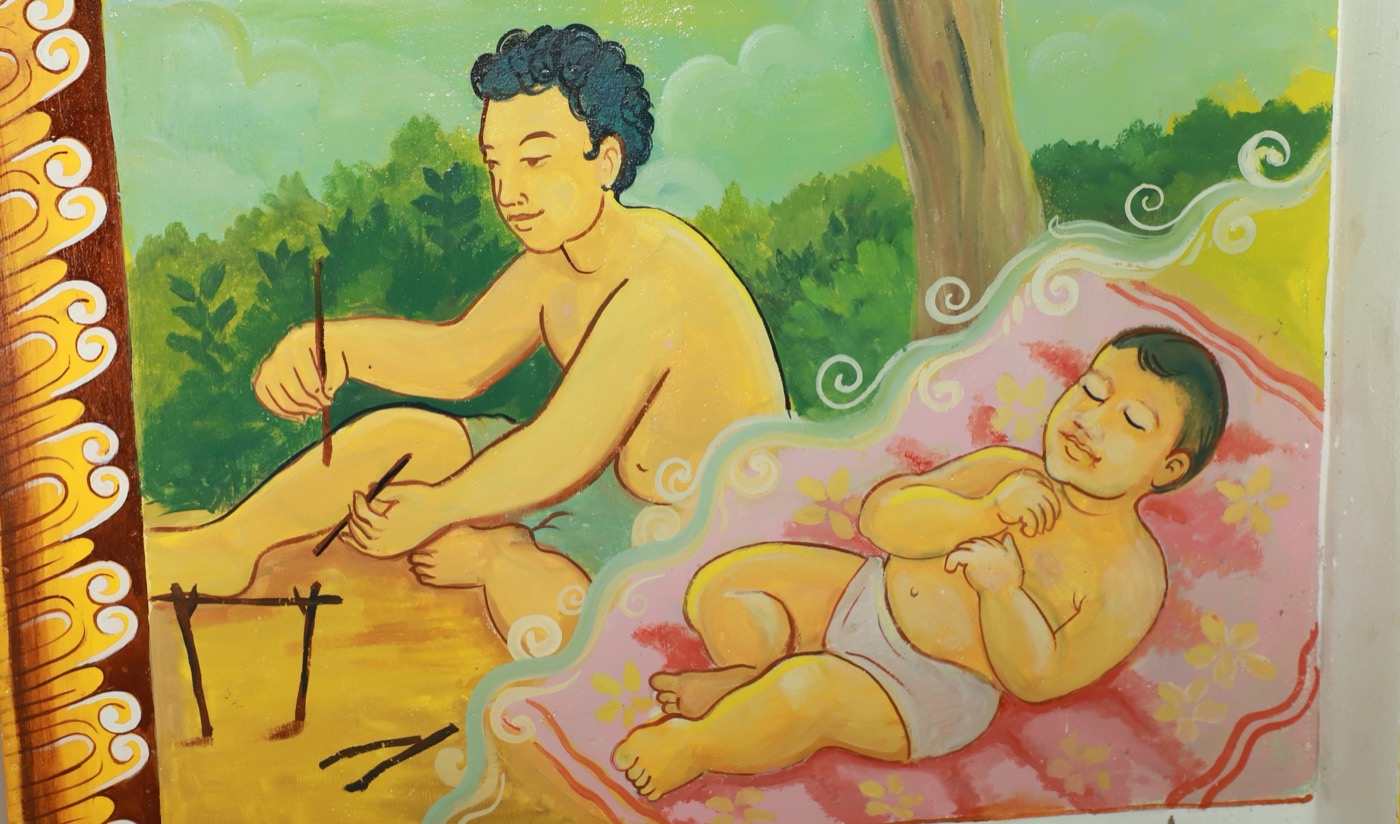
Taking the human lifespan as one hundred years, this series divides life into ten decades — from the tender years of infancy through play, beauty, strength and wisdom, and then the slow decline of each, until life is confined to the sickbed. The paintings teach the impermanence of all vigour, urging the viewer to do good without delay.

The Makara Thorana

15

The Makara Thorana

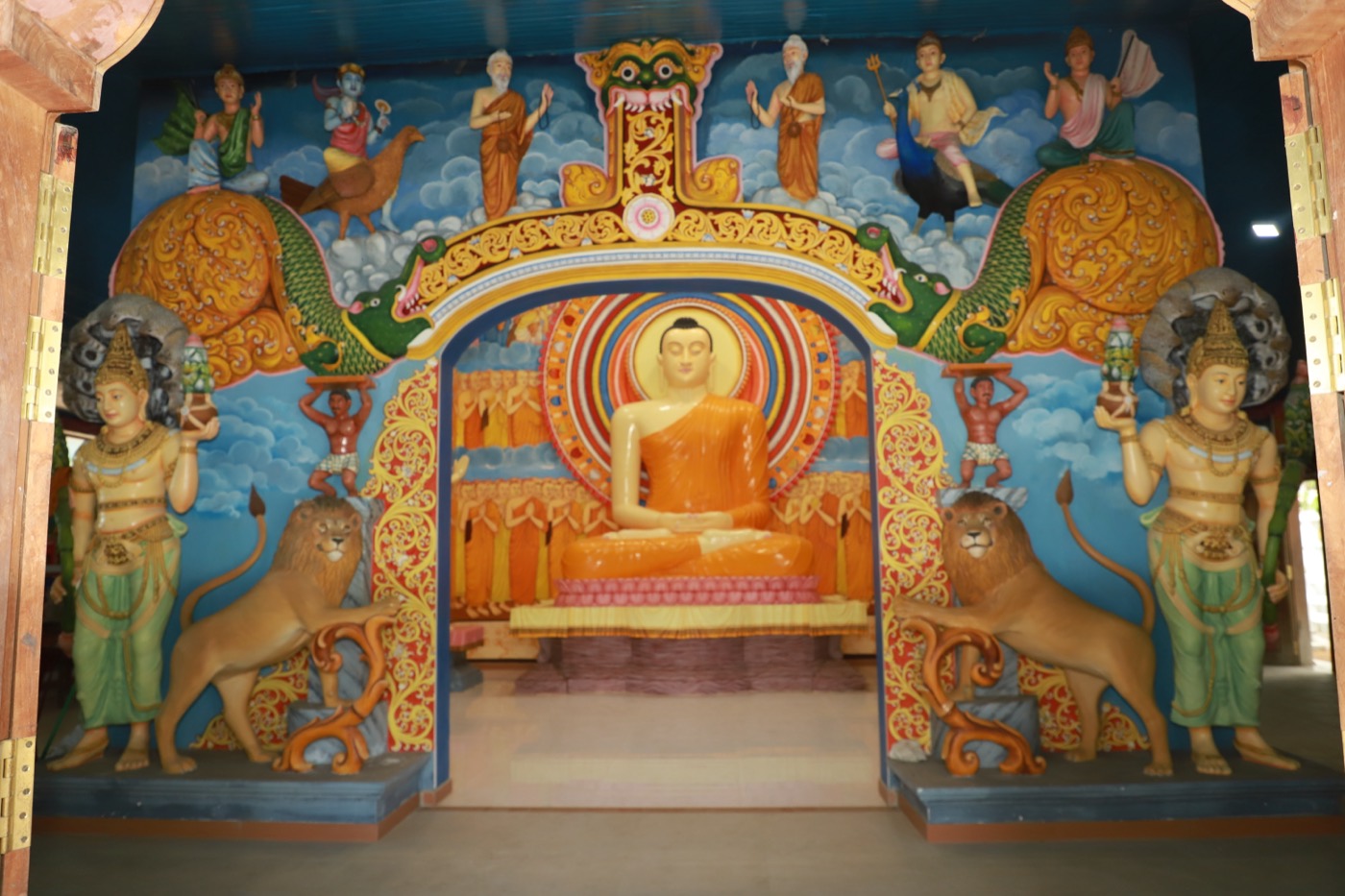
Rising above the main Buddha statue, the Makara Thorana is a signature ornament of Sinhala temple art. The great arch issues from the mouths of two mythical makara, crowned by the protective kibihi face, while deities on either side pay homage to the Buddha. It is a symbolic gateway from the worldly realm into sacred space.

The Ten Perfections

17

The Ten Perfections

10 images

This series depicts the ten perfections the Bodhisattva fulfilled across countless lives on the path to Buddhahood: generosity, virtue, renunciation, wisdom, energy, patience, truthfulness, determination, loving-kindness and equanimity. Each perfection is illustrated through a Jataka story — such as Vessantara for generosity, Mahosadha for wisdom and Khantivadi for patience.

The Arrival of Arahant Mahinda

18

The Arrival of Arahant Mahinda

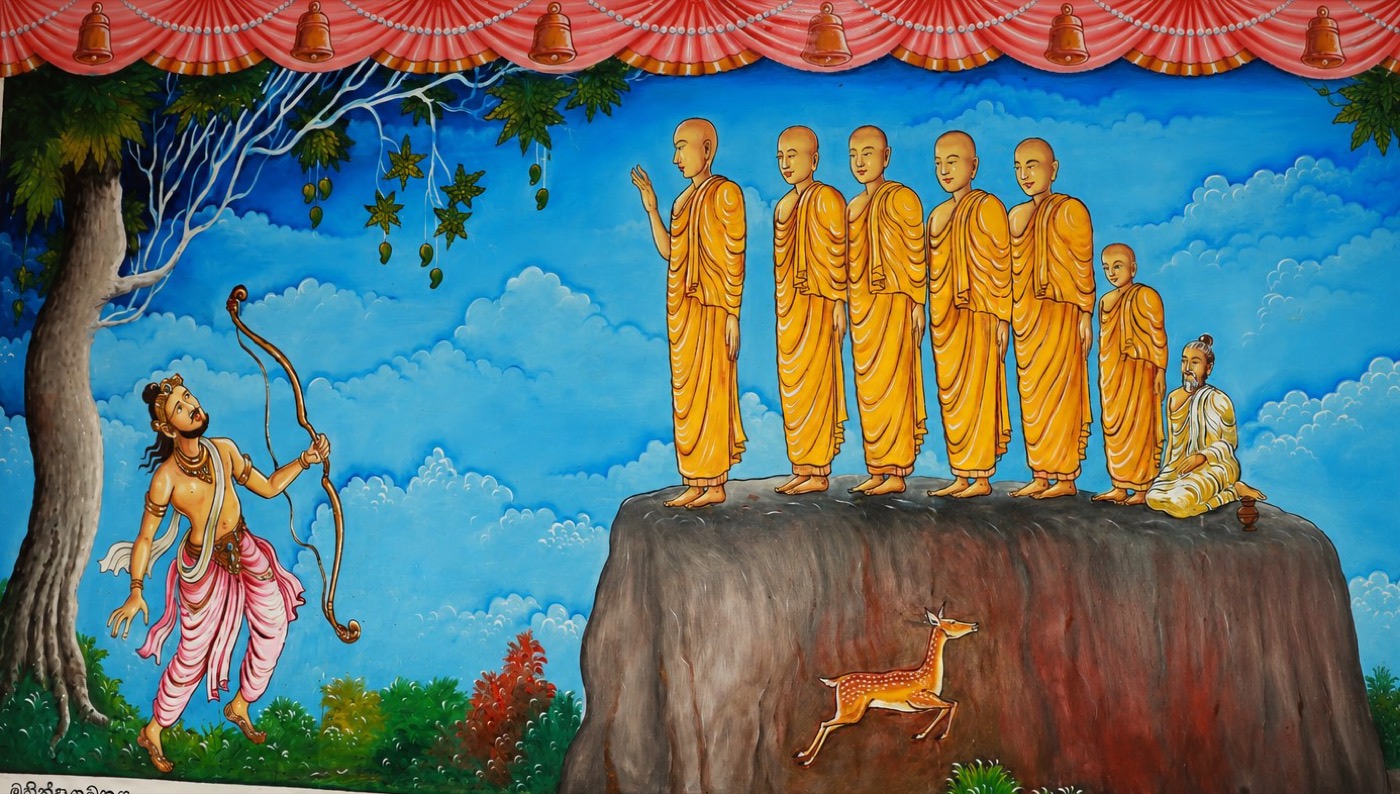
In the third century BCE, Arahant Mahinda, son of Emperor Ashoka, arrived in Sri Lanka and met King Devanampiyatissa on the rock of Mihintale — the historic moment depicted here. Testing the king's wit with his famous riddle about the mango tree, Mahinda then preached the Dhamma, beginning the establishment of Buddhism in Sri Lanka.

The Arrival of the Sacred Bodhi Branch

19

The Arrival of the Sacred Bodhi Branch

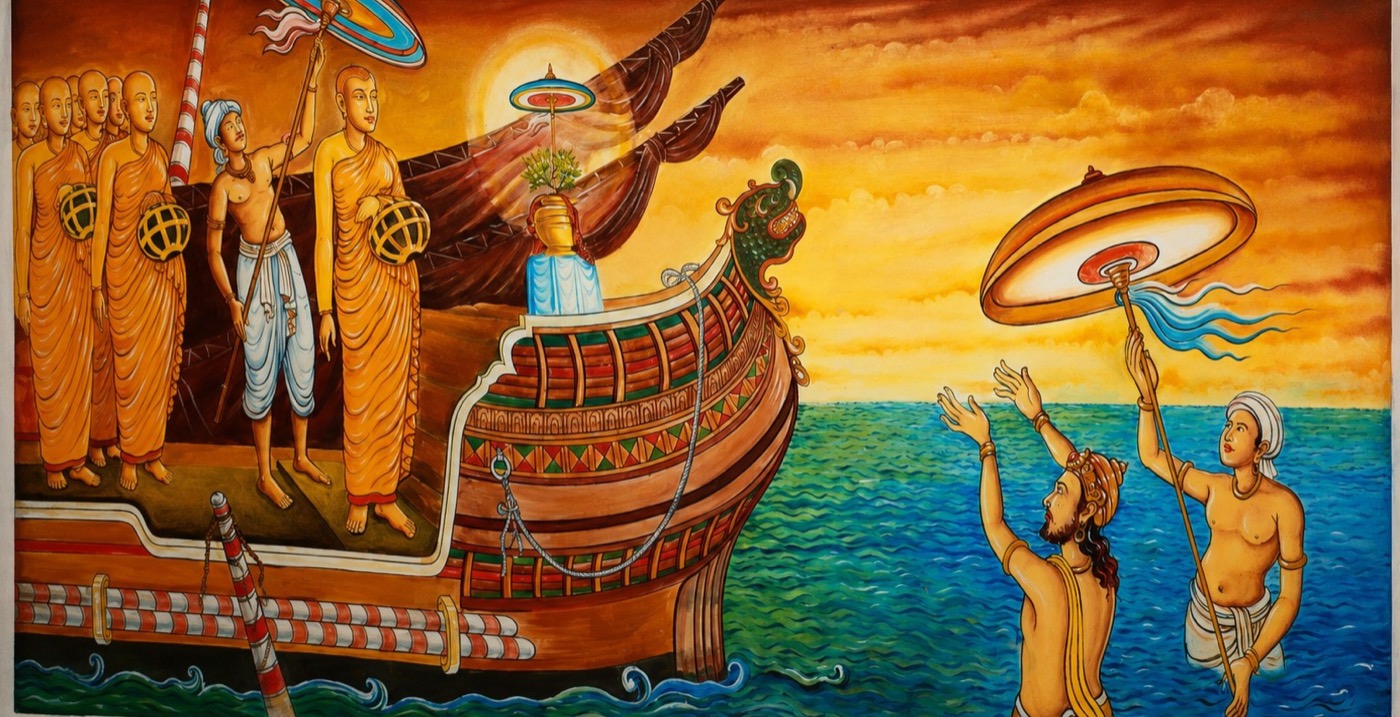
This mural shows Arahant Sanghamitta bringing the southern branch of the sacred Bodhi tree — under which the Buddha attained enlightenment — to Sri Lanka by ship. Planted at Anuradhapura, that tree still lives today, venerated as the oldest historically documented tree in the world, and with her arrival the order of nuns in Sri Lanka began.

Writing Down the Tipitaka

20

Writing Down the Tipitaka

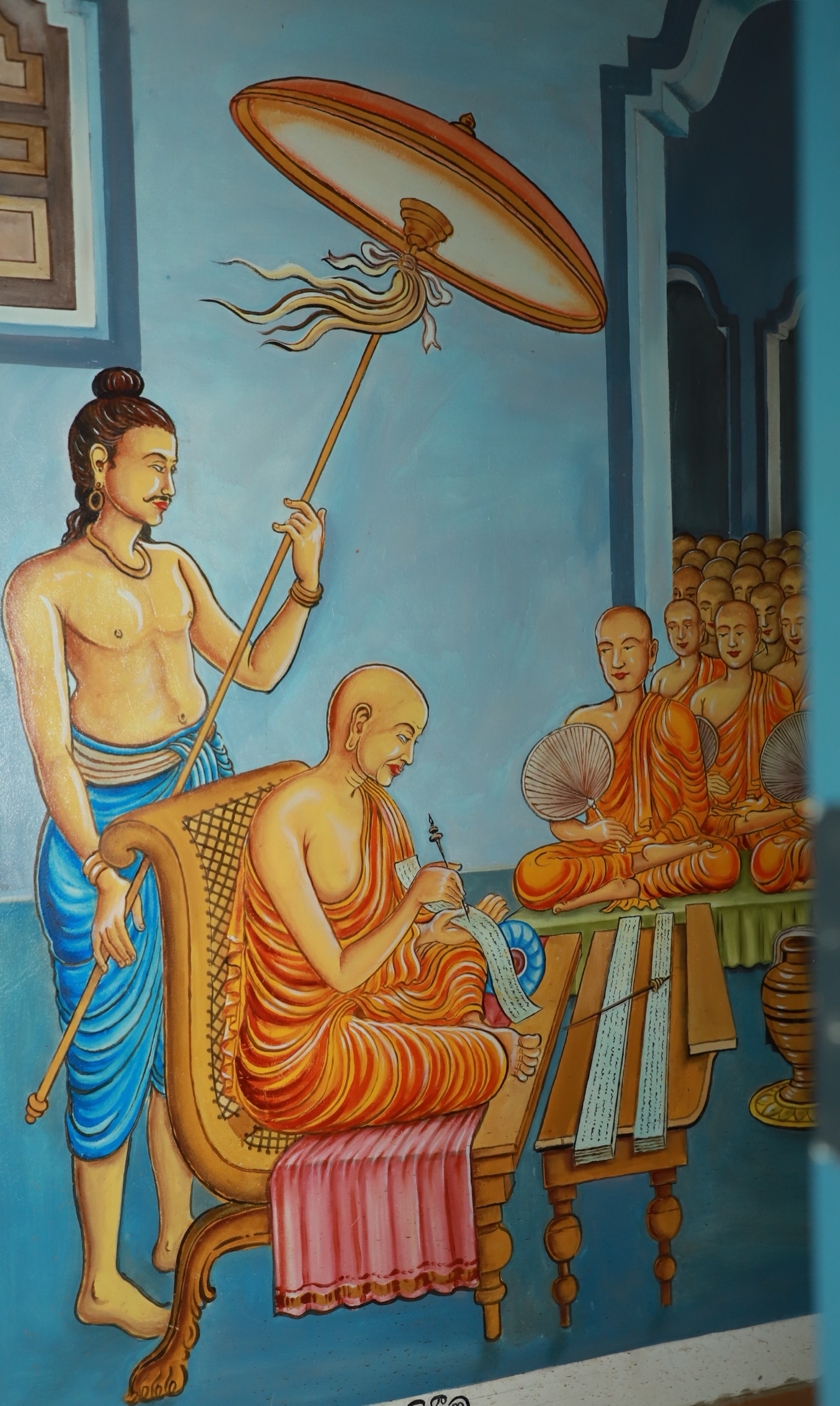
Here the Tipitaka — preserved for centuries by oral tradition — is being written down on ola-leaf manuscripts at the Aluvihara rock temple in Matale, during the reign of King Valagamba in the first century BCE. Five hundred monks took part in this council, the first time in history that the word of the Buddha was committed to writing.

The Arrival of the Sacred Tooth Relic

21

The Arrival of the Sacred Tooth Relic

In the fourth century CE, Princess Hemamala — hiding the relic in her hair — and Prince Dantha brought the sacred Tooth Relic of the Buddha to Sri Lanka, as shown here. Entrusted to King Kithsirimevan, the relic became the very symbol of sovereignty in Sri Lanka, and it is venerated today at the Temple of the Tooth in Kandy.

The Great Passing Away

22

The Great Passing Away

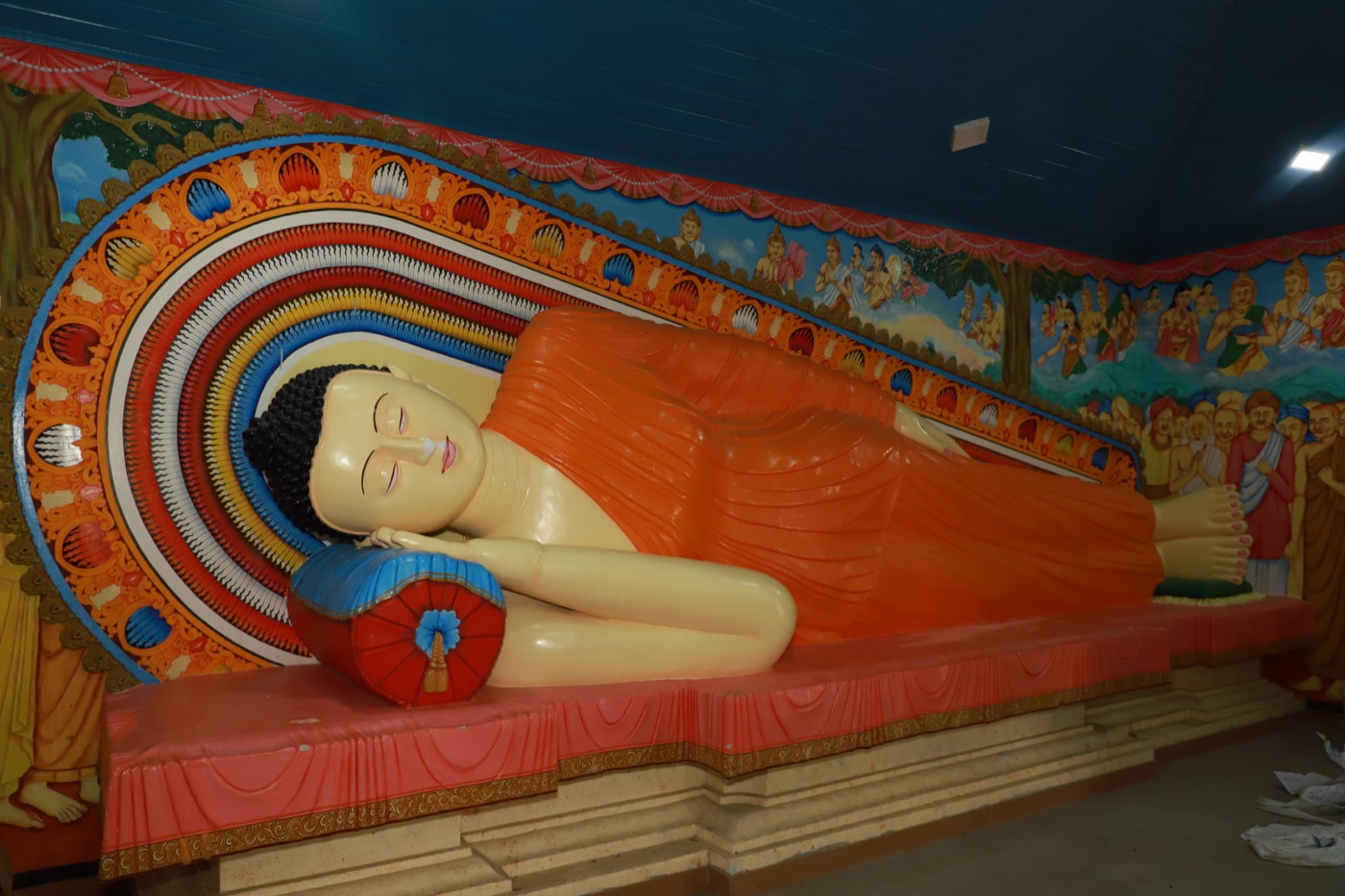
This great reclining statue depicts the Buddha's parinirvana — his final passing away between the twin sal trees in the Upavattana grove of the Malla kings at Kusinara. His last words to the world were: 'All conditioned things are subject to decay; strive on with diligence.' With that final exhortation, he entered the peace of nirvana.

The Four Great References

23

The Four Great References

Shortly before his passing, the Buddha taught the monks the four great references: whoever may proclaim a teaching, it must first be examined and compared against the discourses and the discipline before being accepted. This freedom of inquiry — accepting nothing on blind faith — is depicted here, and it remains one of the most distinctive features of Buddhism.

Ministering to His Father

24

Ministering to His Father

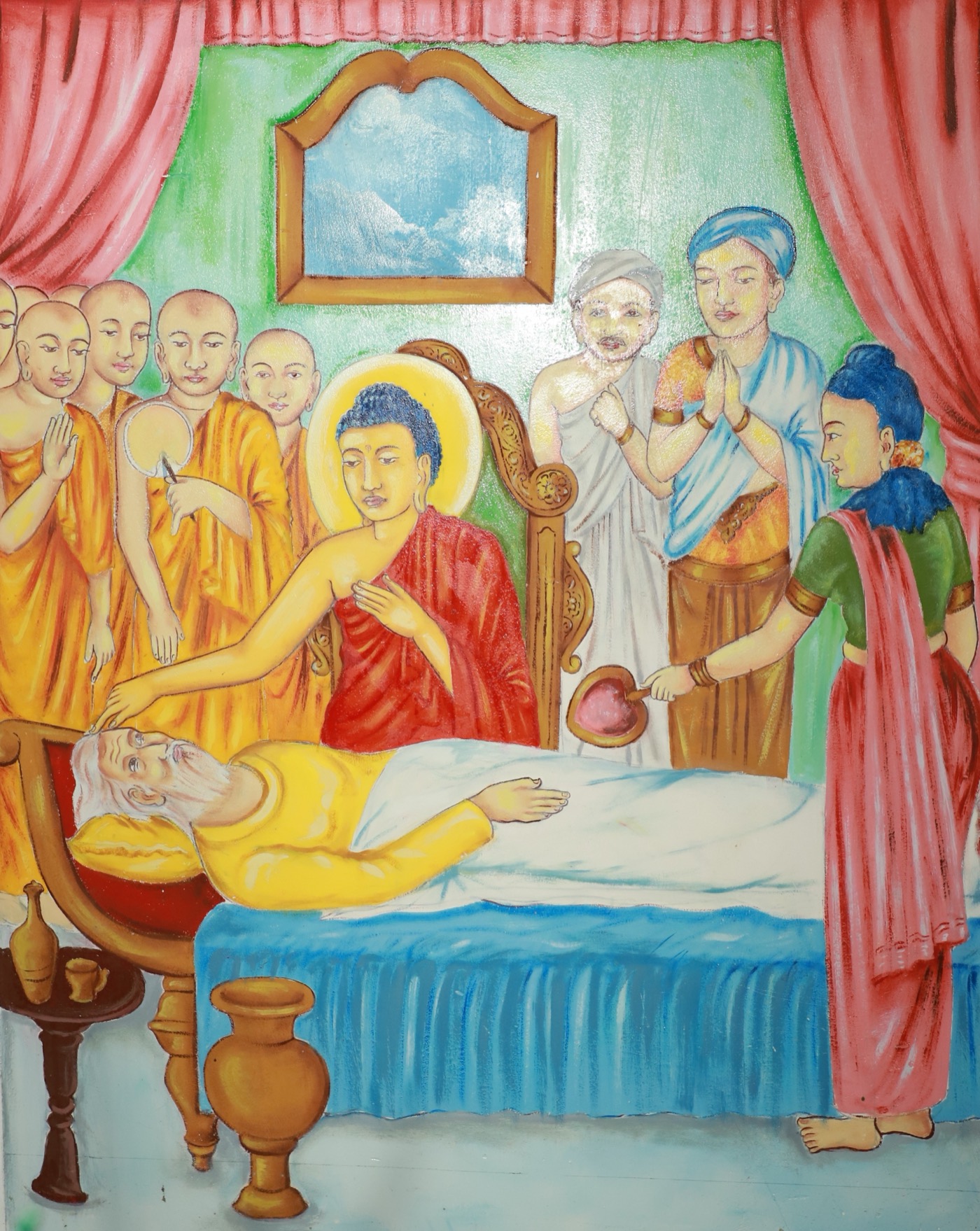
Here the Buddha visits his dying father, King Suddhodana, teaching him the Dhamma at his bedside and leading him to full liberation. This was not merely physical care but the highest spiritual gift a son could give. Buddhist tradition regards it as the supreme example of ministering to one's parents.

The Last Disciple, Subhadda

25

The Last Disciple, Subhadda

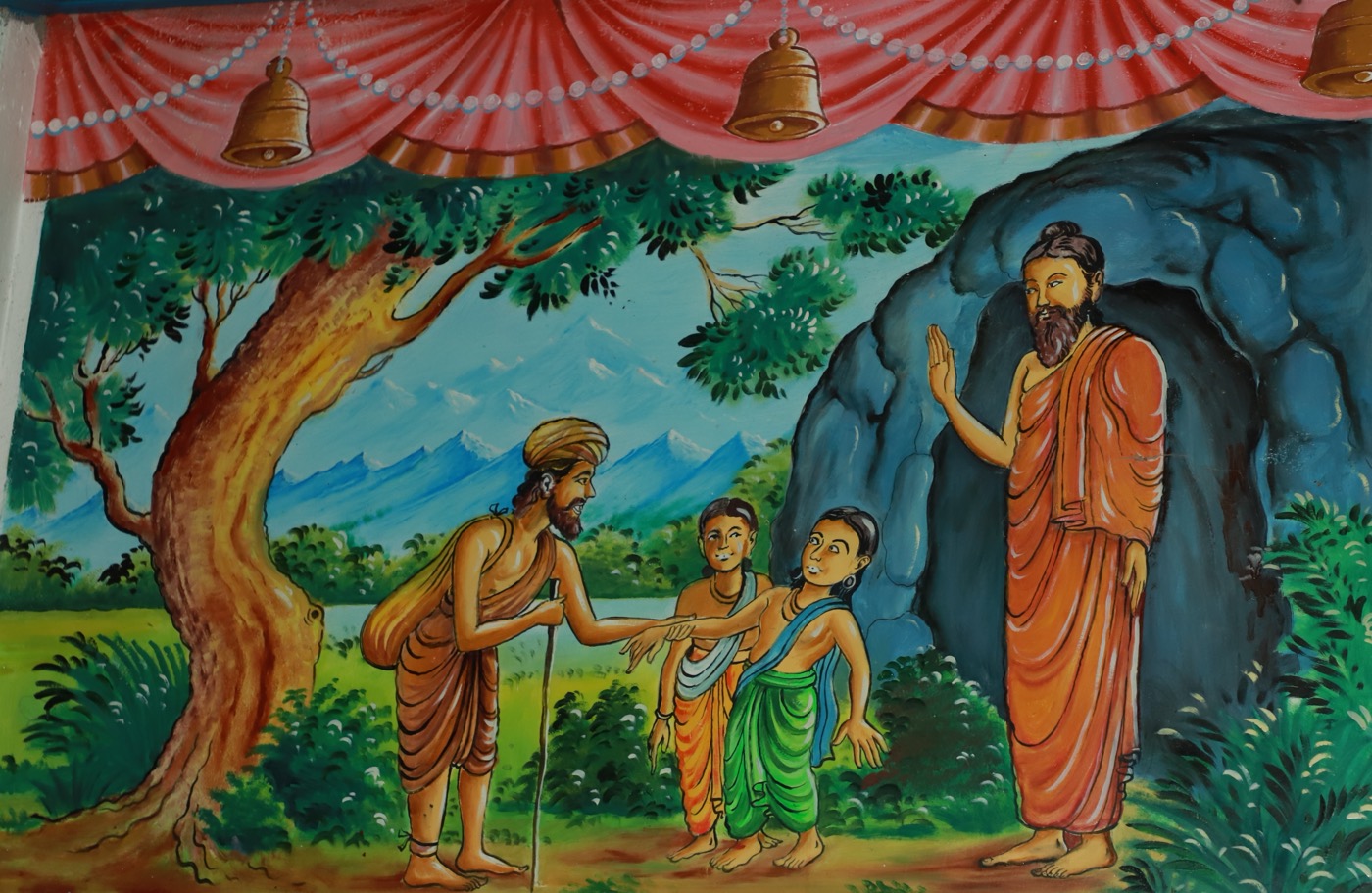
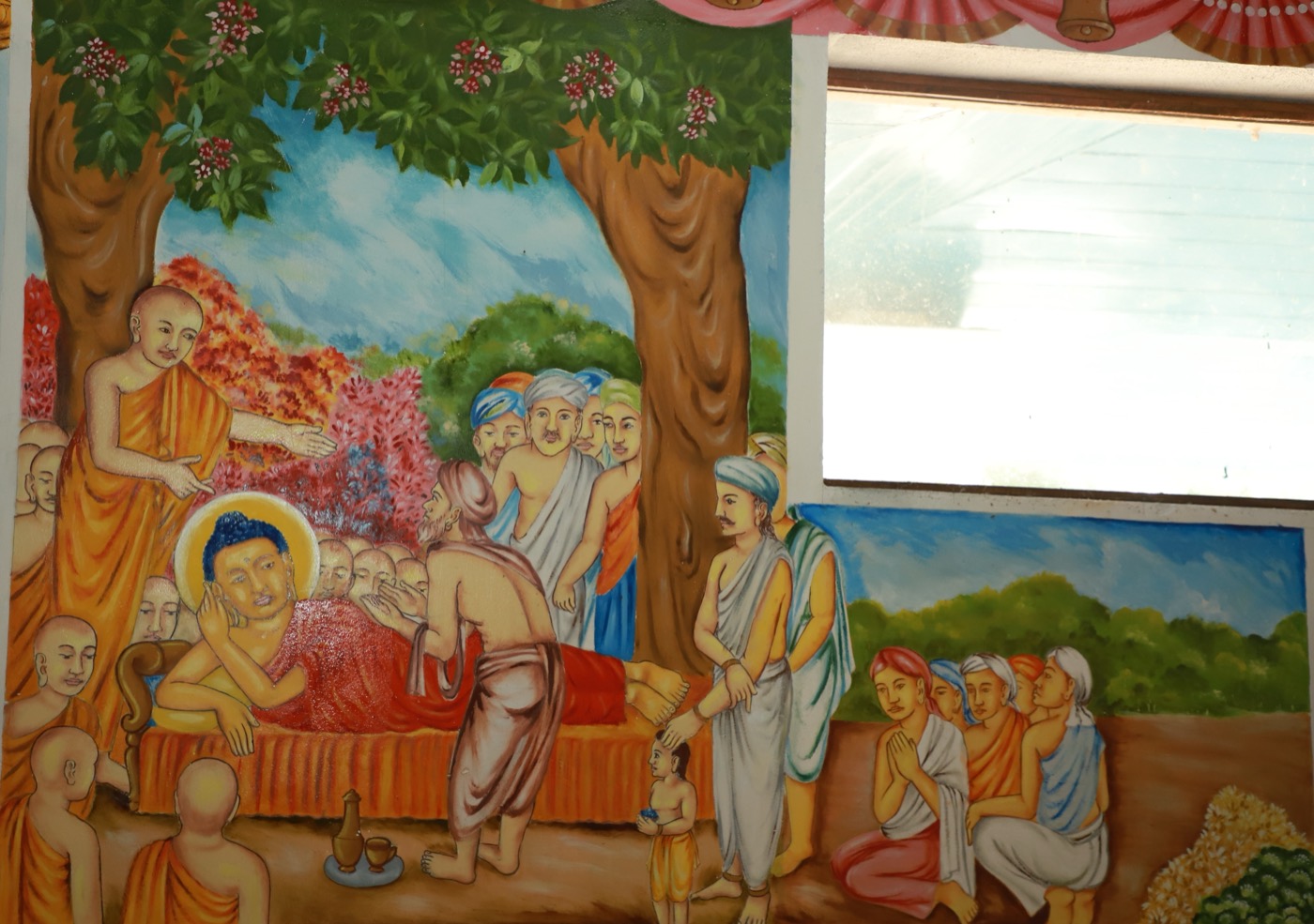
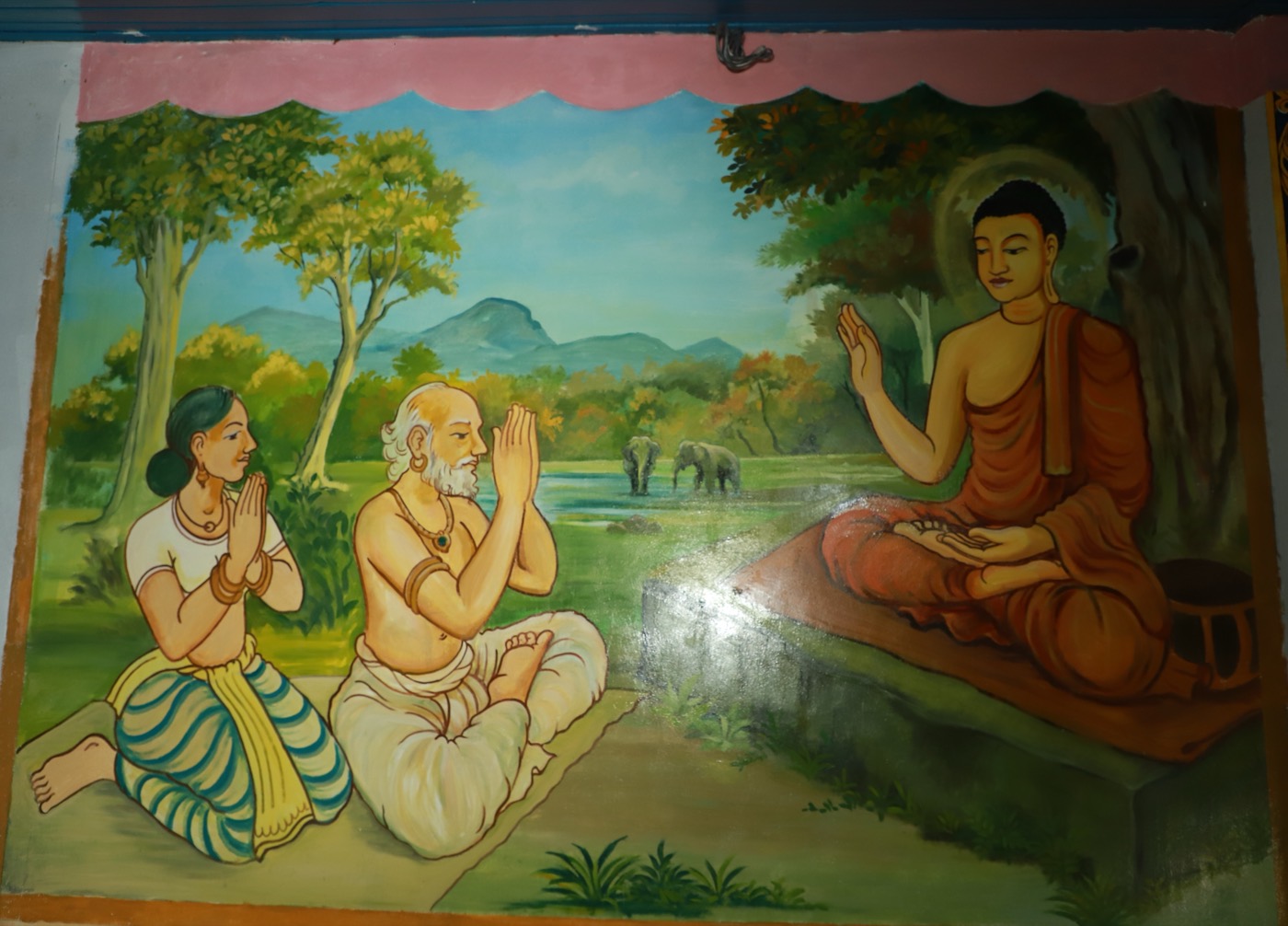
Even as he lay on his deathbed, the Buddha received the wandering ascetic Subhadda, who came with his questions through the permission of Venerable Ananda. The Buddha taught him clearly and simply, and Subhadda understood the truth — earning the distinction of becoming the very last direct disciple of the Buddha.

Settling the Shakya-Koliya Dispute

26

Settling the Shakya-Koliya Dispute

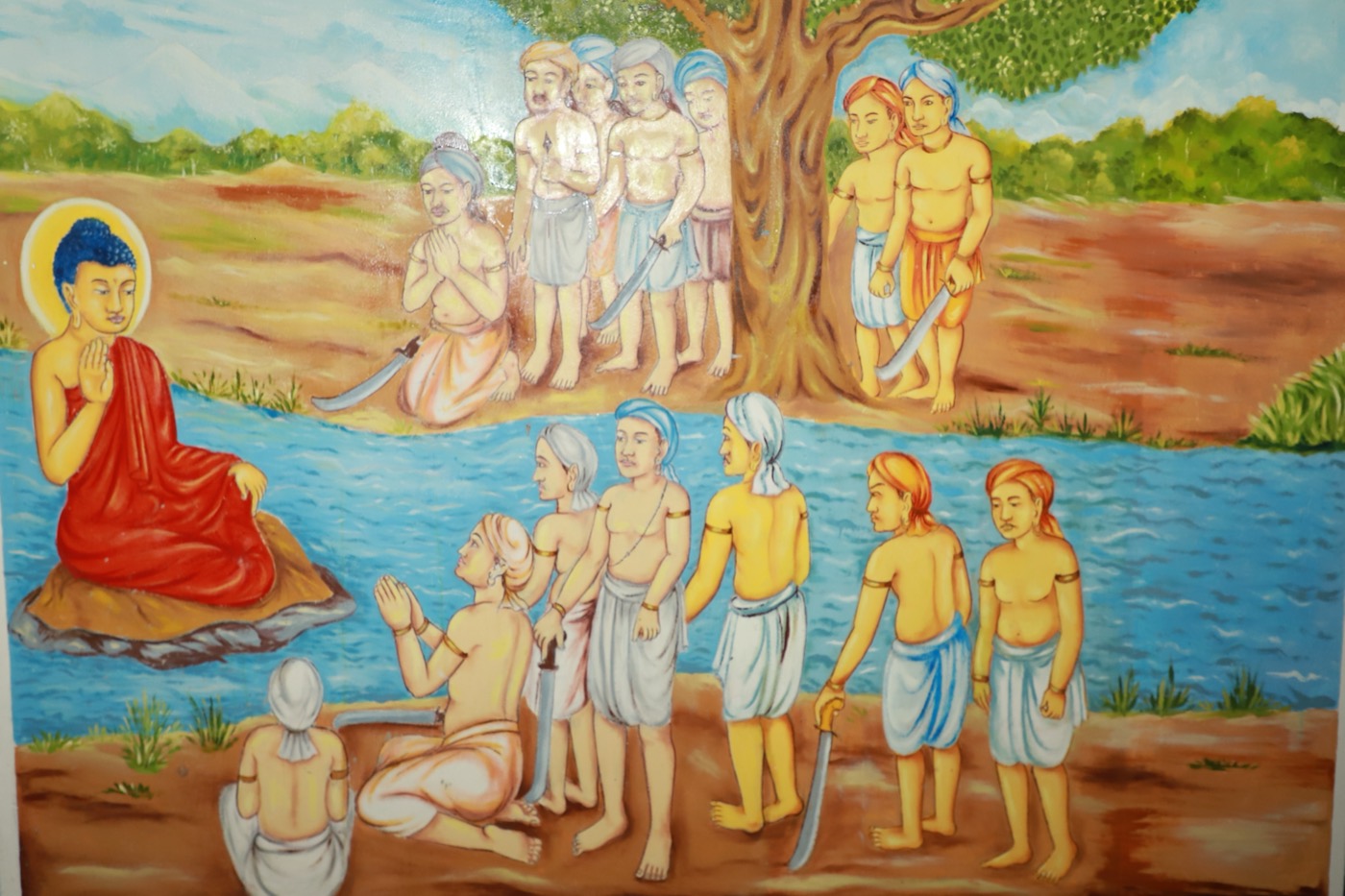
When the Shakya and Koliya clans stood ready for war over the waters of the river Rohini, the Buddha appeared between the armies and asked: 'Is water worth more than human lives?' The war was averted. This painting reminds us that understanding, dialogue and loving-kindness — not force — are the true means of resolving conflict.

The Five Sense Attachments — Telapatta Jataka

27

The Five Sense Attachments — Telapatta Jataka

5 images

Based on the Telapatta Jataka, these five panels depict the consequences of clinging to the five senses — attachment to sights, sounds, smells, tastes and touch. Like the man who must carry a bowl brimming with oil without spilling a drop amid every temptation, they teach the value of mindful living, for it is attachment that binds beings to suffering.

The First Sermon

28

The First Sermon

This three-dimensional tableau depicts the Dhammacakkappavattana Sutta — the Buddha's first sermon, delivered to the five ascetics in the deer park at Isipatana. Revealing the Four Noble Truths and the Noble Eightfold Path, it set the wheel of the Dhamma in motion, and Kondanna became the first to realise the truth.

Unshaken by the Eight Worldly Winds

29

Unshaken by the Eight Worldly Winds

8 images

The 'tadi' quality is the mind's unshakability before the eight worldly conditions: gain and loss, fame and disgrace, blame and praise, pleasure and pain. These eight panels show the Buddha meeting each — receiving royal honours or harsh insults alike — with the same perfect equanimity, a timeless example of remaining neither elated by success nor broken by defeat.

Queen Mahamaya's Dream

30

Queen Mahamaya's Dream

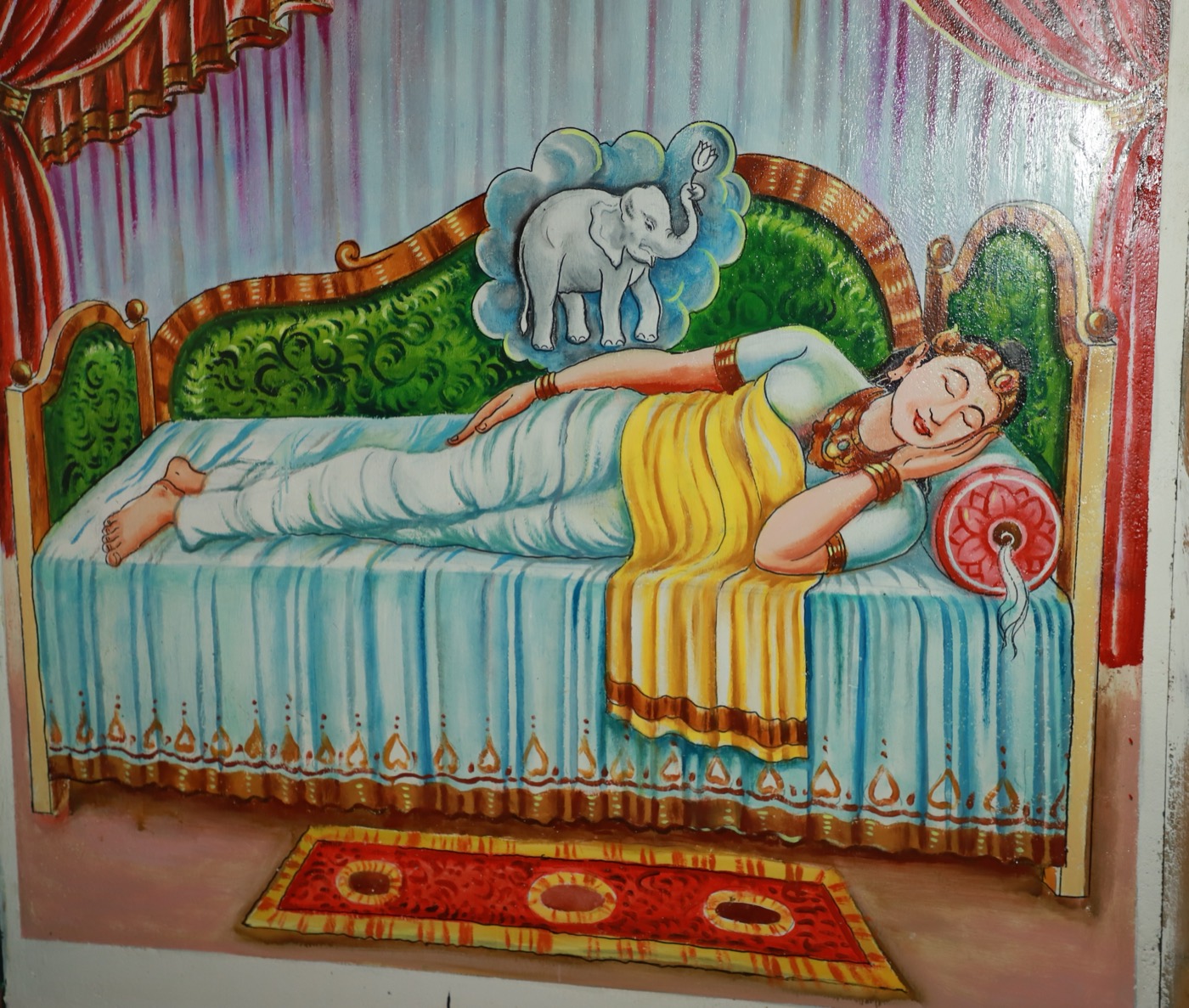
One night Queen Mahamaya saw a wondrous dream: a white elephant, bearing a white lotus, entered her womb through her right side. The royal sages interpreted it as the conception of a supreme being who would bring great light to the world. It was the first sign of the coming birth of Prince Siddhartha.

Queen Mahamaya's Journey to Devdaha

31

Queen Mahamaya's Journey to Devdaha

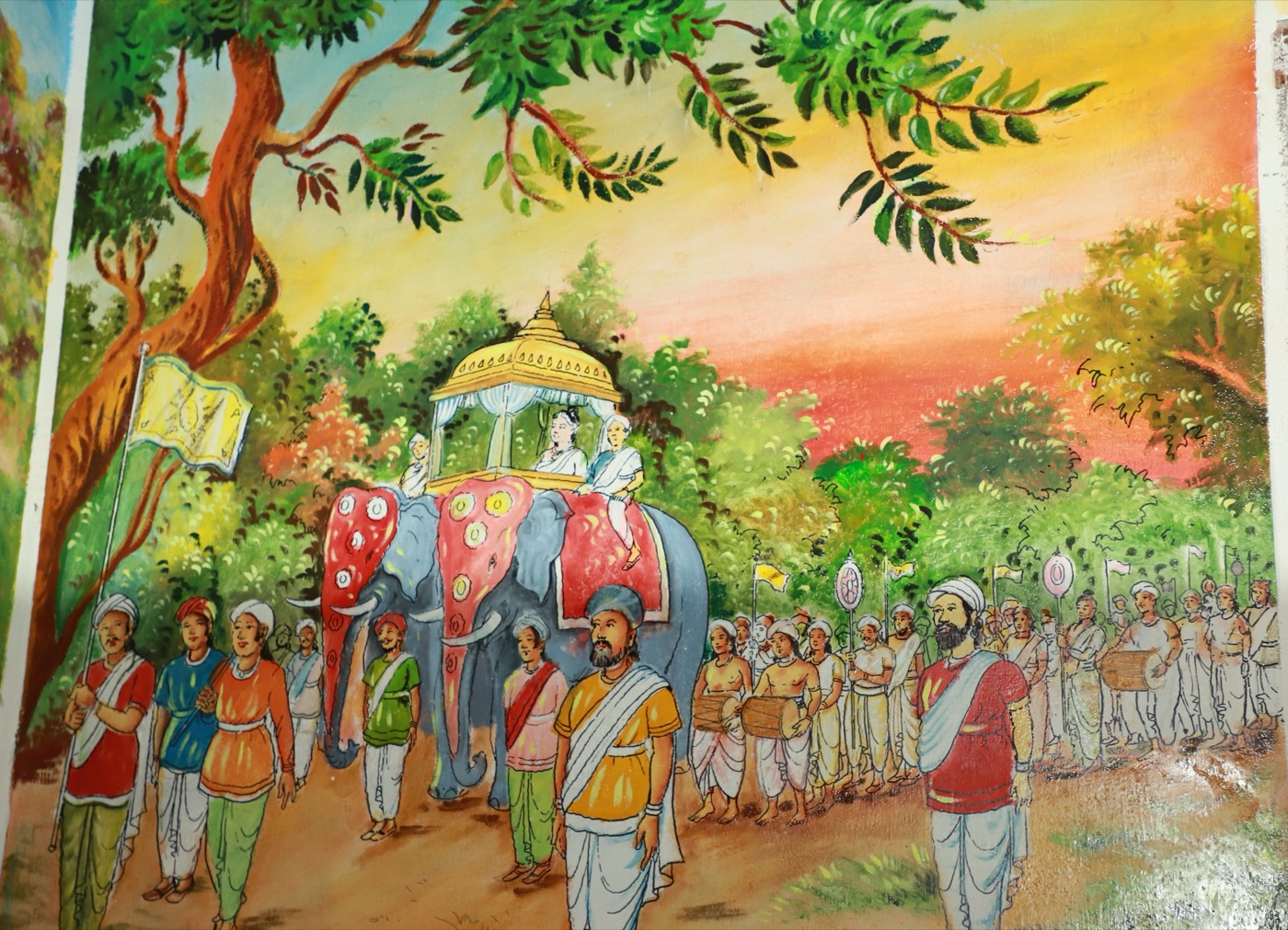
Here Queen Mahamaya sets out in royal procession for Devdaha, her mother's city, for the birth of her child — a splendid journey of elephants, horses, banners, flowers and music. On the way she stopped to rest in the sal grove of Lumbini, and it was there, beneath the flowering trees, that Prince Siddhartha was born.

The Birth of Prince Siddhartha

32

The Birth of Prince Siddhartha

This mural depicts the birth of Prince Siddhartha in the sal grove of Lumbini. The moment he was born, the child took seven steps, and at each step a lotus blossomed beneath his feet, while gods and brahmas rejoiced. It is the first of the great moments in the life story of the Buddha.

The Ploughing Festival

33

The Ploughing Festival

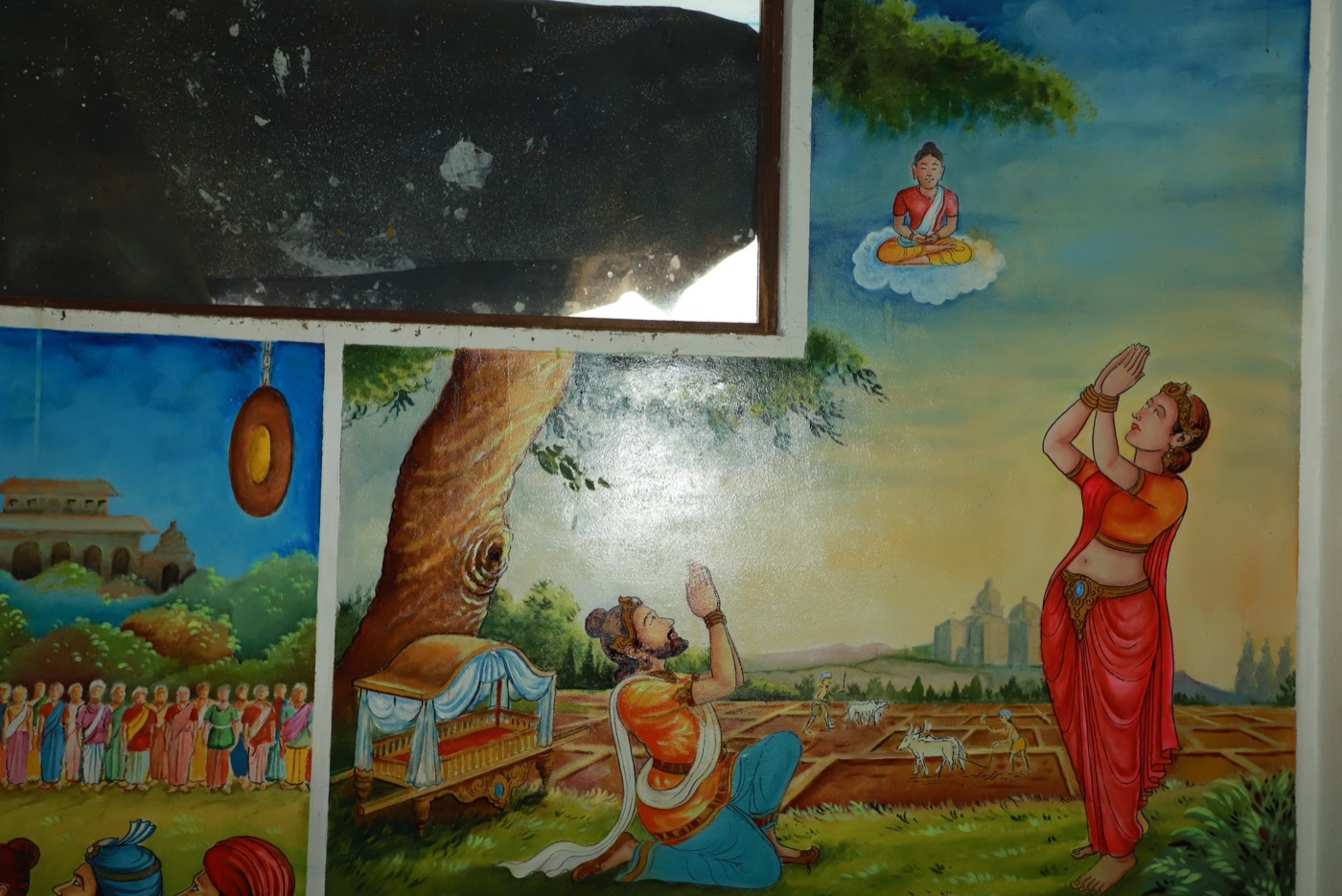
During the royal ploughing festival, the young Prince Siddhartha, seated alone beneath a rose-apple tree, entered the first meditative absorption through mindfulness of breathing. Though the sun moved across the sky, the tree's shadow stood still over the prince. Seeing this marvel, King Suddhodana bowed to his own son for the second time.

The Prince's Compassion for Animals

34

The Prince's Compassion for Animals

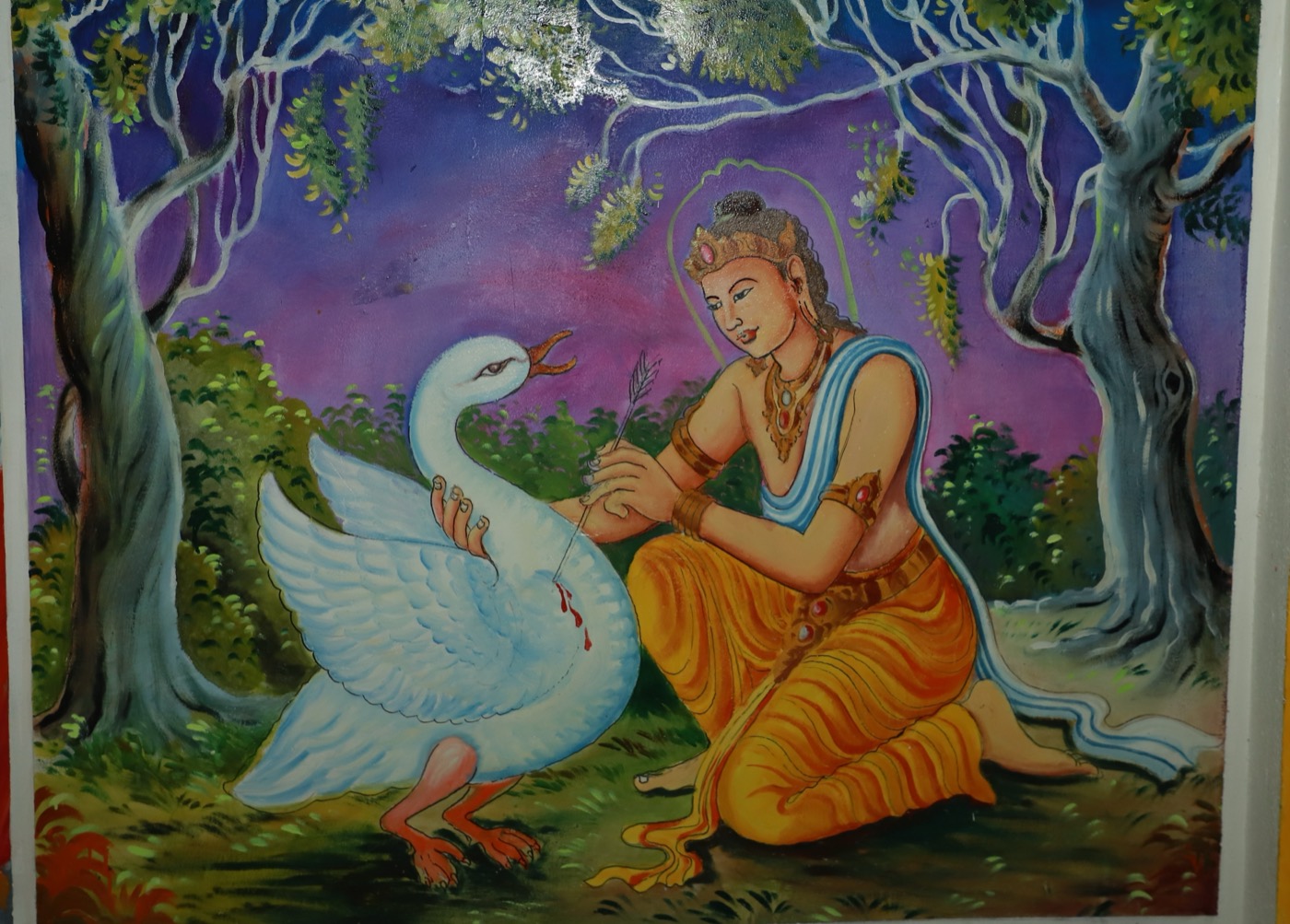
When Prince Devadatta shot down a swan, young Siddhartha took the wounded bird and nursed it back to health, declaring: 'A life belongs not to the one who tries to take it, but to the one who saves it.' This boundless compassion for all living beings foreshadowed his future Buddhahood.

The Display of Skills

35

The Display of Skills

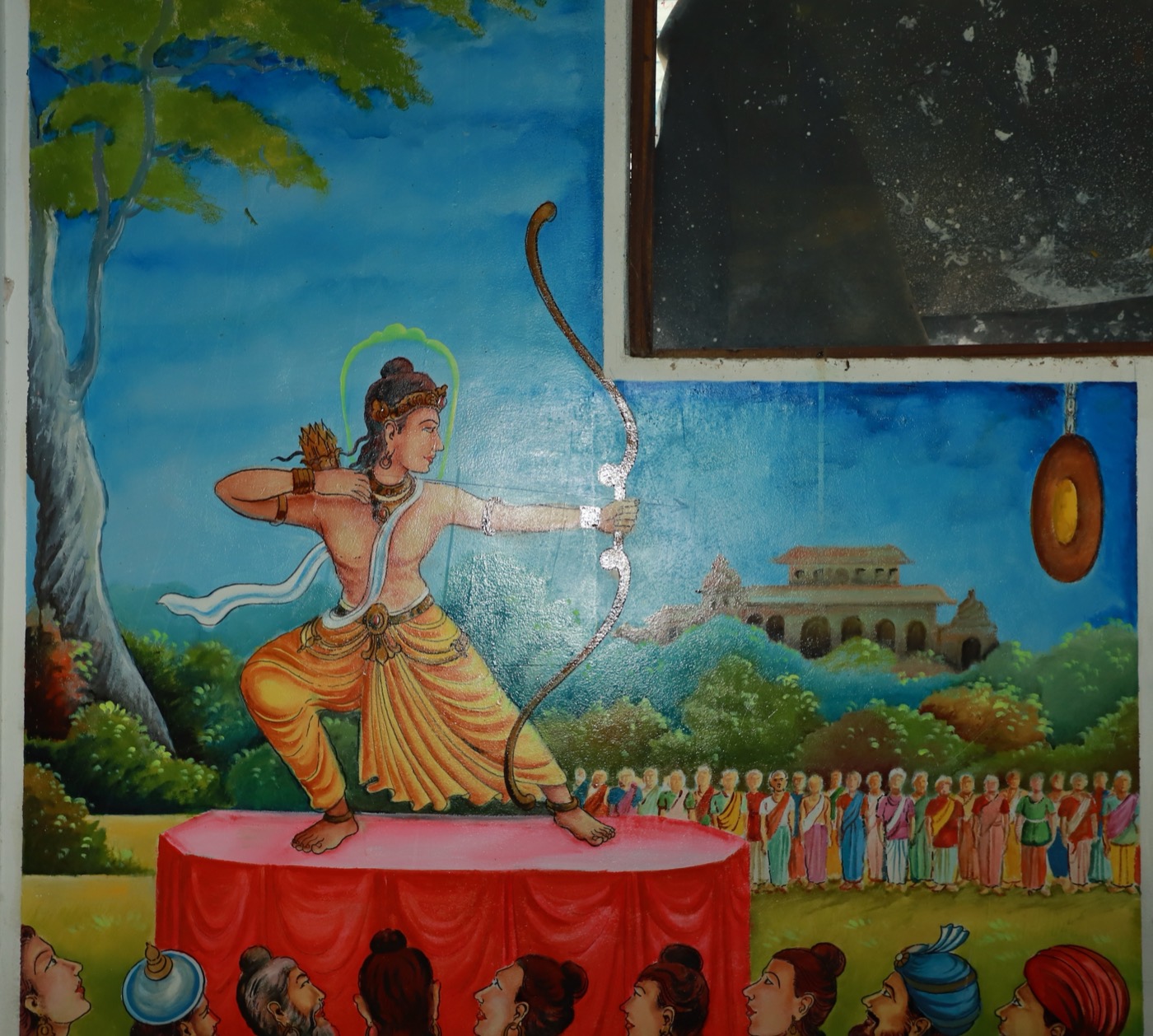
Following Shakya custom, Prince Siddhartha here displays his mastery of the eighteen arts — archery above all — before the royal assembly. Surpassing every other Shakya prince, he proved himself complete in body and mind alike: a union of physical strength, keen wisdom and perfect self-command.

The Marriage of Prince Siddhartha

36

The Marriage of Prince Siddhartha

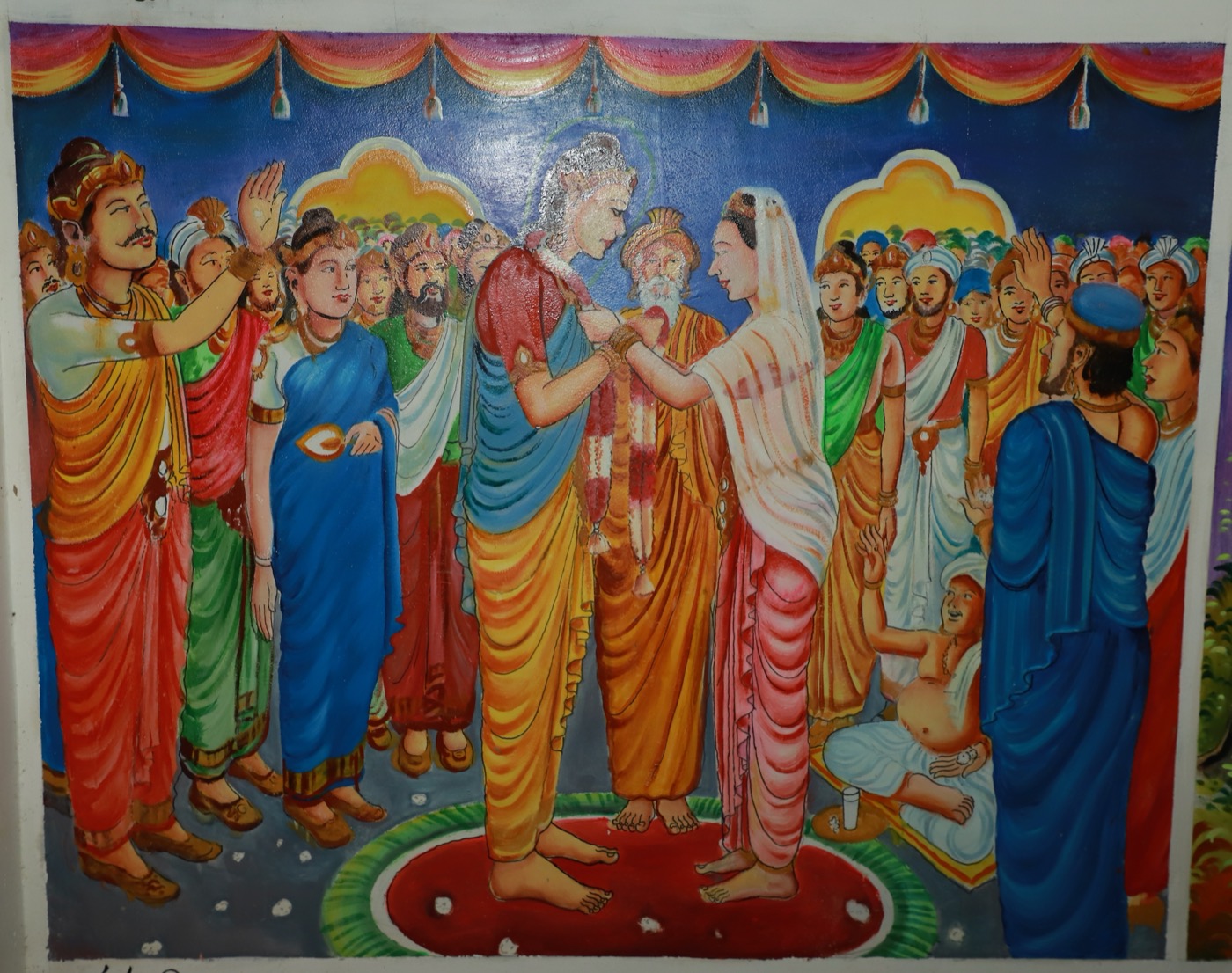
After the display of skills, the sixteen-year-old Prince Siddhartha wed Princess Yasodhara, daughter of King Suppabuddha, in the splendid ceremony shown here. Though King Suddhodana built him separate palaces for the three seasons, the prince came to understand the impermanence of worldly pleasure — and would one day leave it all in search of awakening.

Caring for the Sick

37

Caring for the Sick

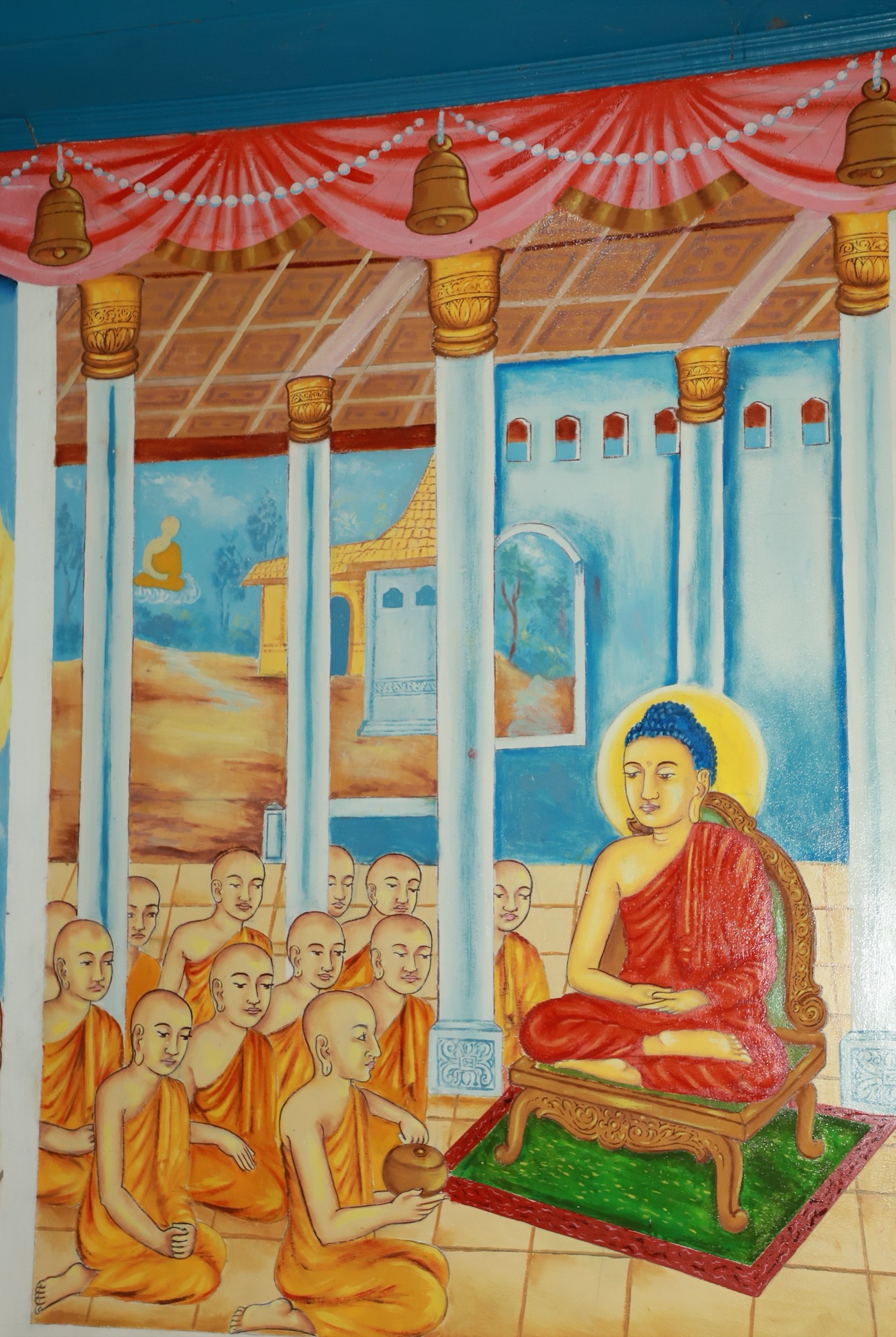
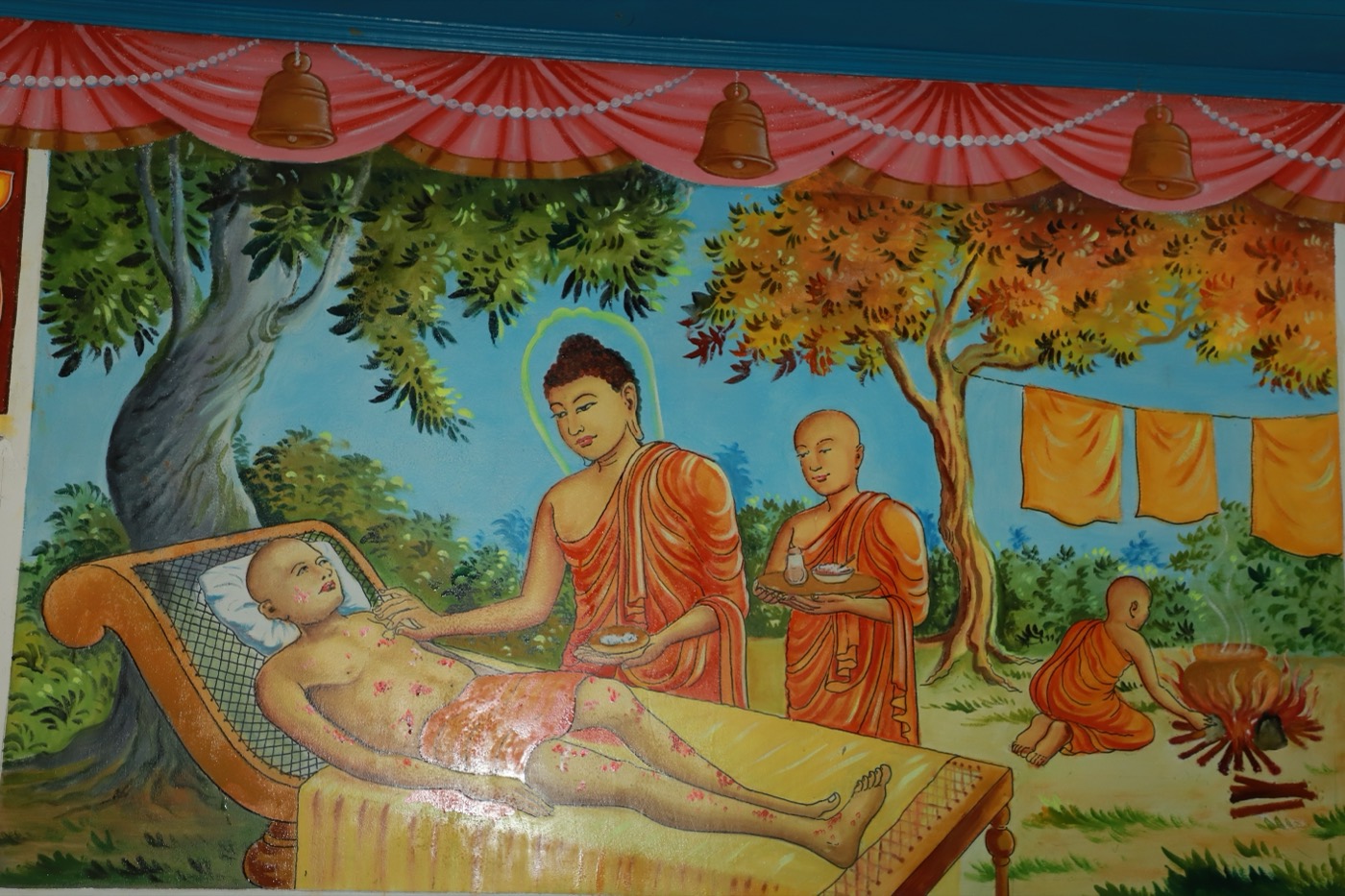
Here the Buddha, with Venerable Ananda, personally bathes and tends the monk Putigattatissa, whose diseased body all others had abandoned. 'Whoever would minister to me,' he declared, 'let him minister to the sick.' With his own hands, the Teacher showed the world that caring for the ill is among the noblest of all merits.

Rescuing the Helpless Sopaka

38

Rescuing the Helpless Sopaka

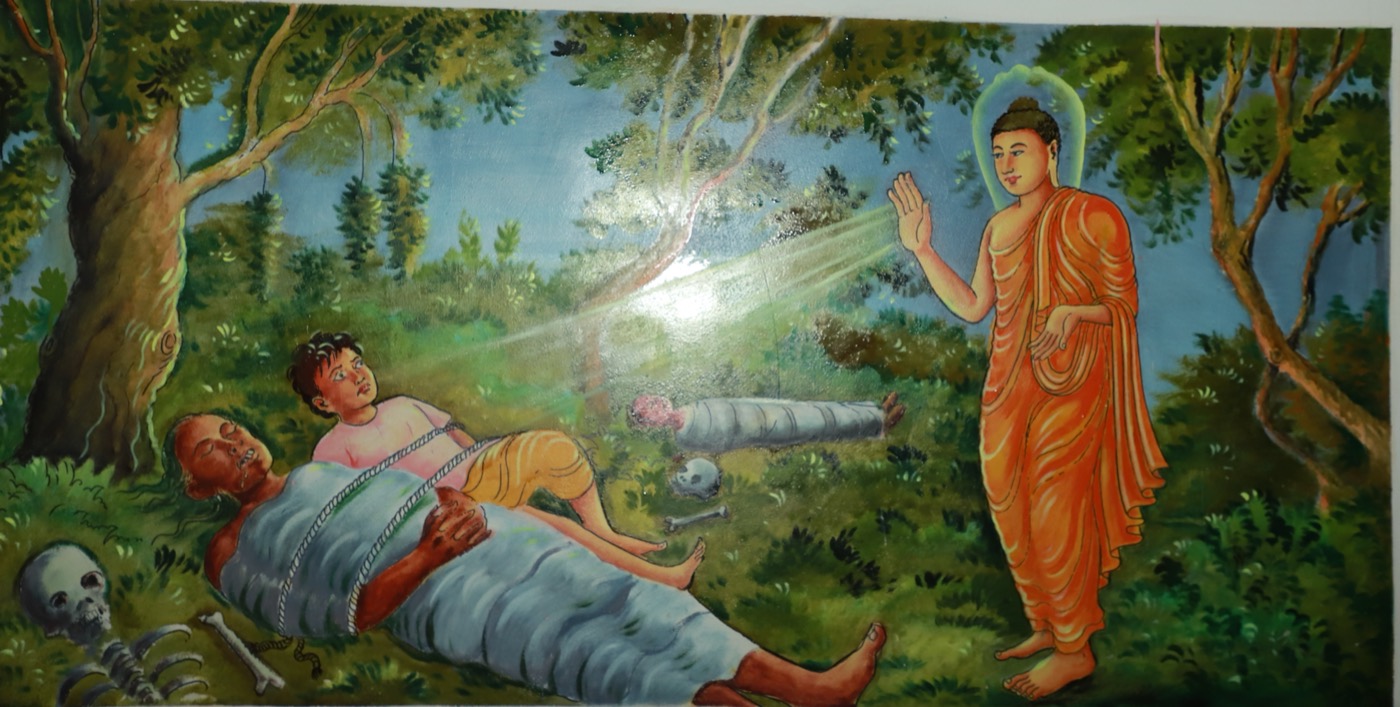
The little boy Sopaka, cruelly abandoned in a charnel ground by his stepfather, was seen by the Buddha through his divine eye and rescued from death. Ordained as a novice, the child attained arahantship while still very young. The story shows that the path of the Dhamma stands open to everyone, regardless of birth, age or station.

Consoling the Grief-Stricken Patachara

39

Consoling the Grief-Stricken Patachara

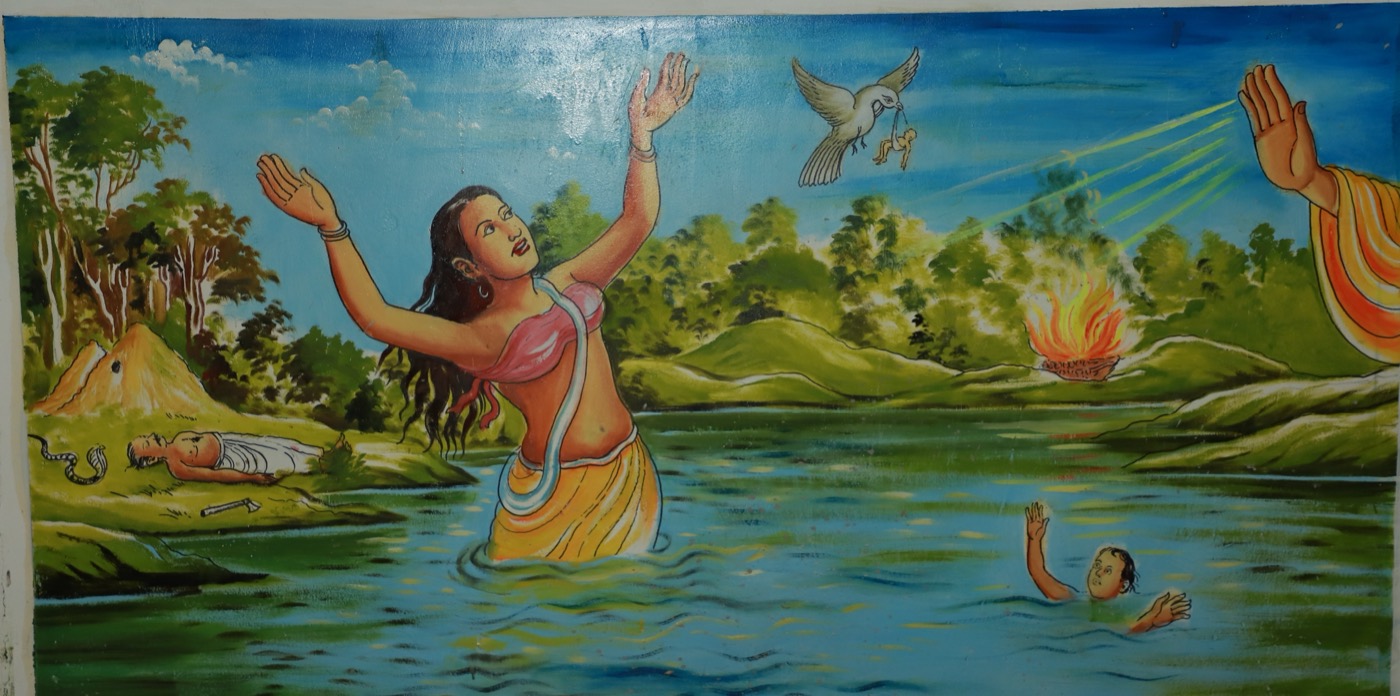
Patachara, driven out of her mind by the loss of her husband, her two children and her parents all within days, wandered in despair until she came before the Buddha. He received her with compassion, calmed her mind and taught her the truth of impermanence. She entered the order of nuns and attained arahantship — a timeless example of healing from grief.

Arahant Sivali

40

Arahant Sivali

This is the statue of Arahant Sivali, whom the Buddha declared foremost among recipients of offerings. Son of Princess Suppavasa, he brought abundance wherever he travelled — so much so that to this day Buddhists invoke his memory when wishing for prosperity and sufficiency in their homes.

The Buddha's Visit to Nagamaha Viharaya

41

The Buddha's Visit to Nagamaha Viharaya

According to the ancient Dhatuvamsa chronicle, during his third visit to Sri Lanka the Buddha rested for a while at this very spot, where the temple's dagoba now stands. The grounds of Nagamaha Viharaya are therefore revered as sanctified by the Buddha's own presence — the temple's unique historic distinction.

Prince Mahanaga Builds the Viharaya

42

Prince Mahanaga Builds the Viharaya

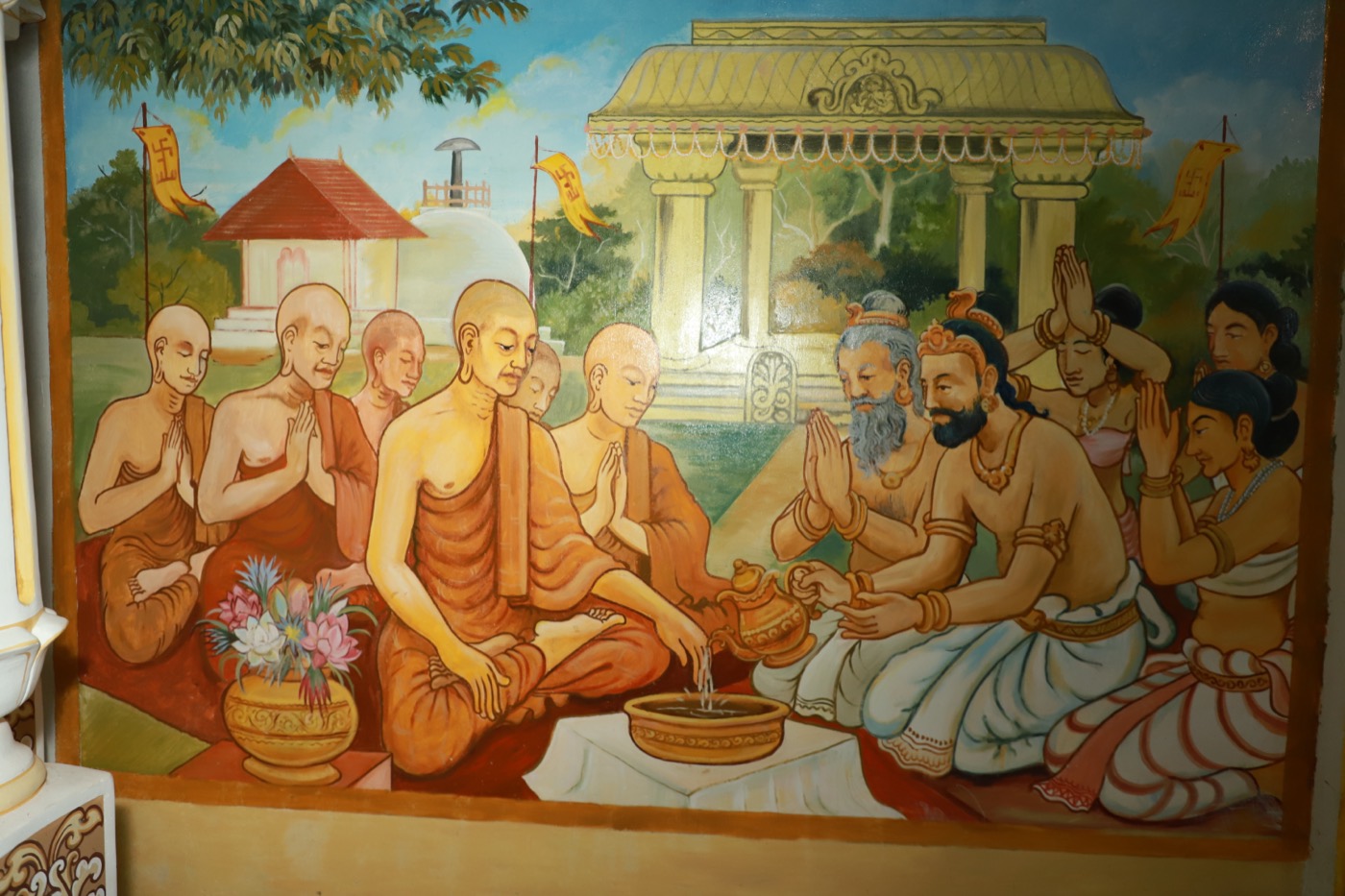
As the great chronicle Mahavamsa records, this temple was built and offered to the Sangha by Prince Mahanaga, founder of the Ruhuna kingdom, and it was named 'Nagamaha Viharaya' in his honour. From that day to this — across more than two thousand years — this sacred ground has remained a living centre of devotion.

The Seven Weeks — Paintings of the Old Shrine

42A

The Seven Weeks — Paintings of the Old Shrine

7 images

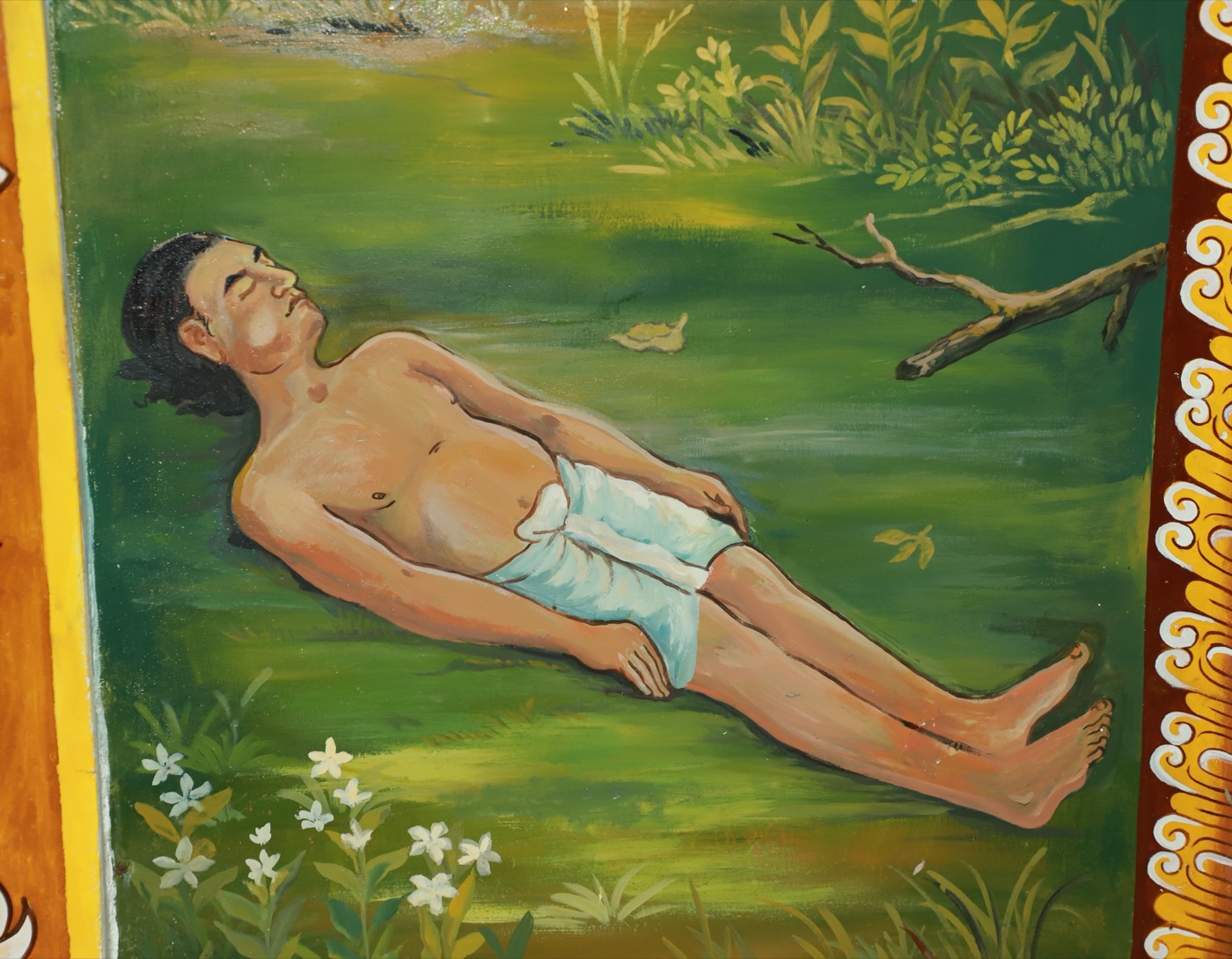
These paintings from the temple's old shrine depict the seven weeks the Buddha spent after his enlightenment: seated in the bliss of liberation beneath the Bodhi tree; gazing at the tree in unblinking gratitude; walking the jewelled path; contemplating the Abhidhamma in the jewelled chamber as six-coloured rays streamed forth; beneath the Ajapala banyan; sheltered from the storm by the serpent king Muchalinda; and at the Rajayatana tree, where the merchants Tapussa and Bhallika became his first lay disciples.

The Palanquin of Seven Maidens

44

The Palanquin of Seven Maidens

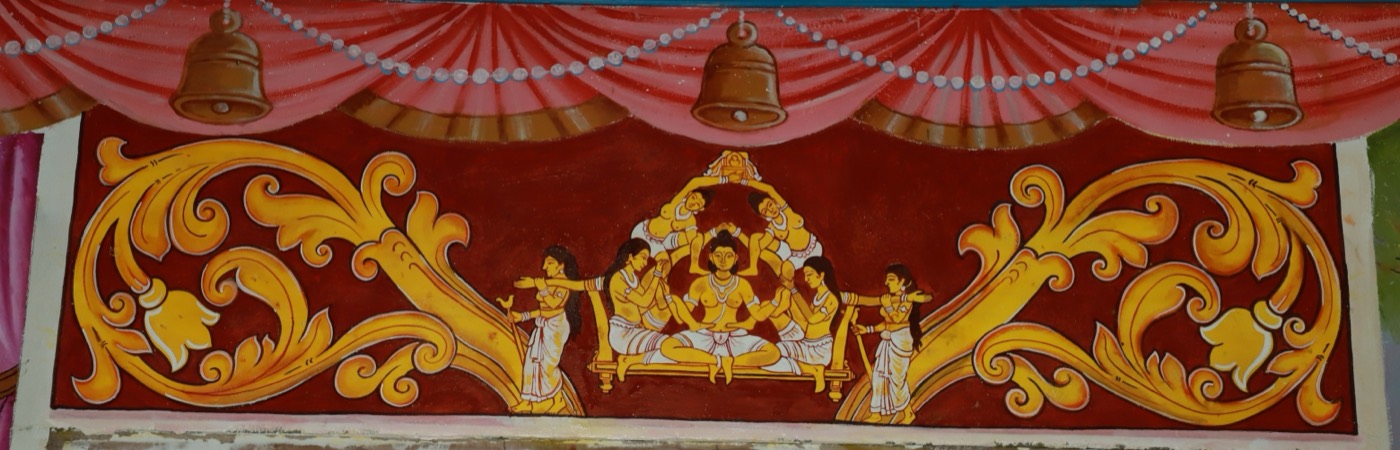
This painting of seven celestial maidens bearing a palanquin is a graceful symbolic work of Sri Lankan temple art. The palanquin they carry represents the supremacy of the Dhamma, the honour of offerings made to the Buddha, and the sanctity of the temple itself.

The Swan Pair and Maiden-Vine Garland

45

The Swan Pair and Maiden-Vine Garland

The swan-pair motif seen on the shrine ceiling is one of the most beloved traditional designs of Sri Lankan decorative art. The swan symbolises purity and discerning wisdom — the fabled ability to separate milk from water — while the adjoining maiden-vine garland represents the unbroken flow of life.

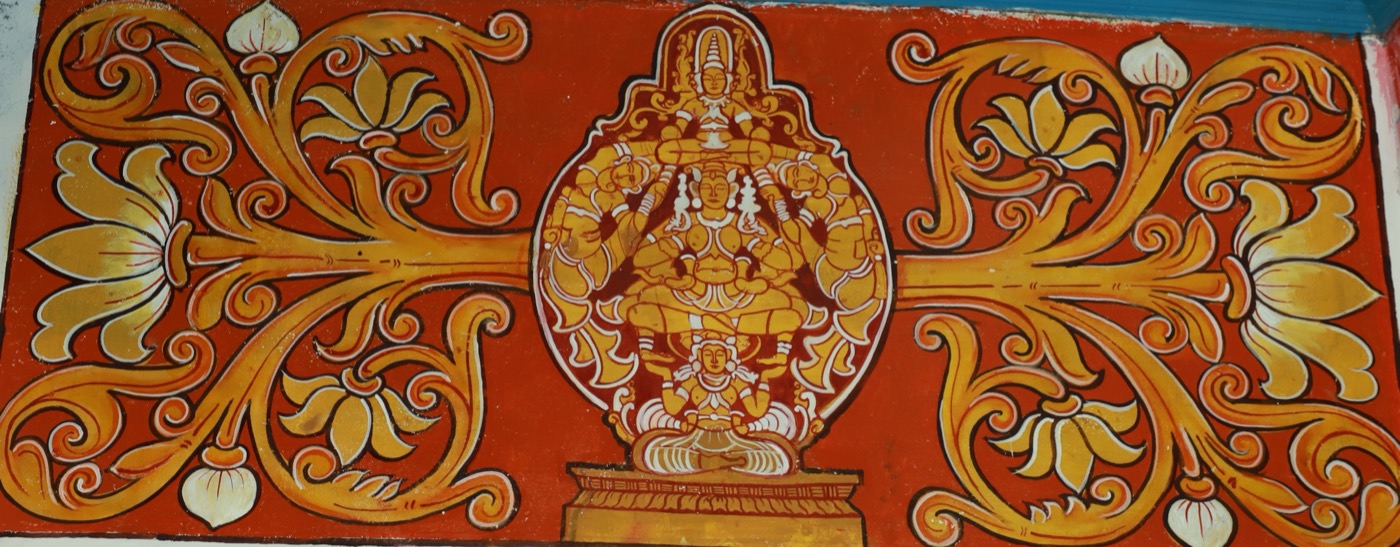
The Vessel of Five Maidens

46

The Vessel of Five Maidens

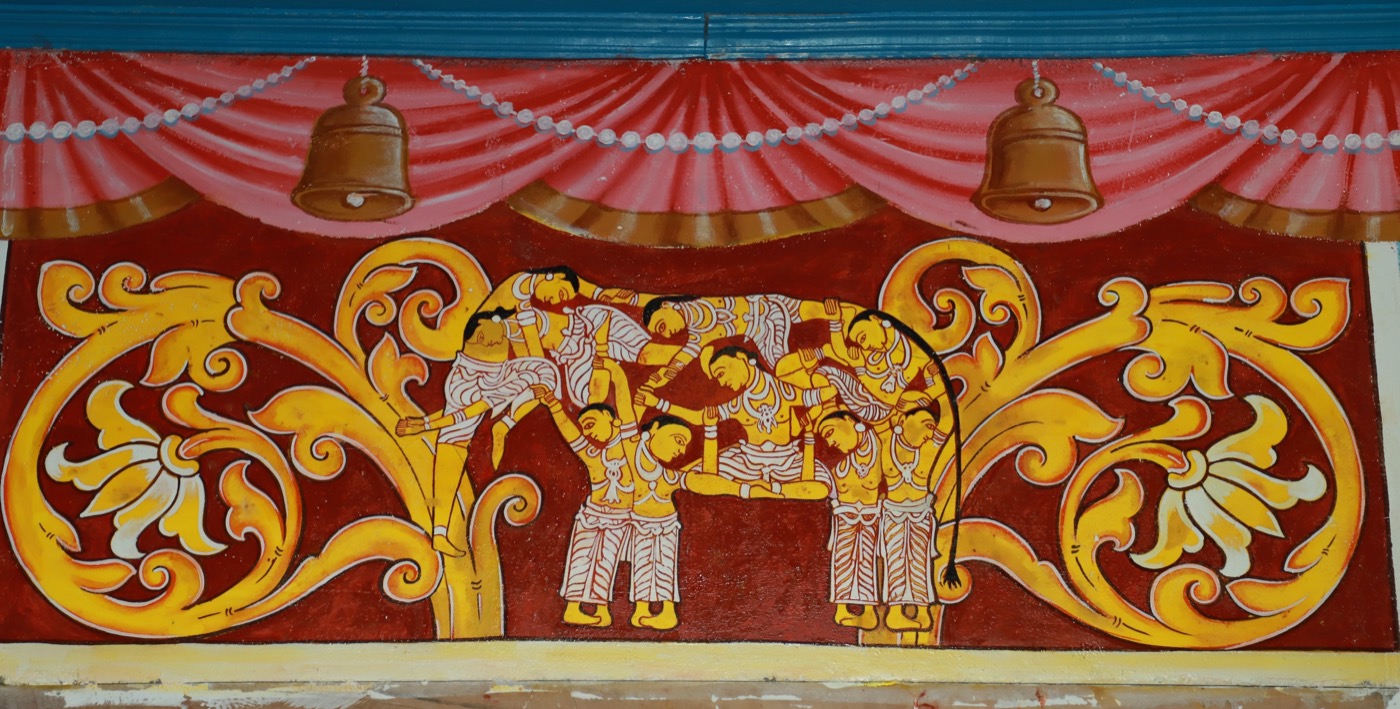
The 'Panchanari Gataya' — five female figures composed into the shape of a brimming vessel — is an ornamental symbolic motif of temple and shrine art. The full vessel is the age-old sign of abundance, prosperity and blessing, making this composition a painted wish for the flourishing of life.

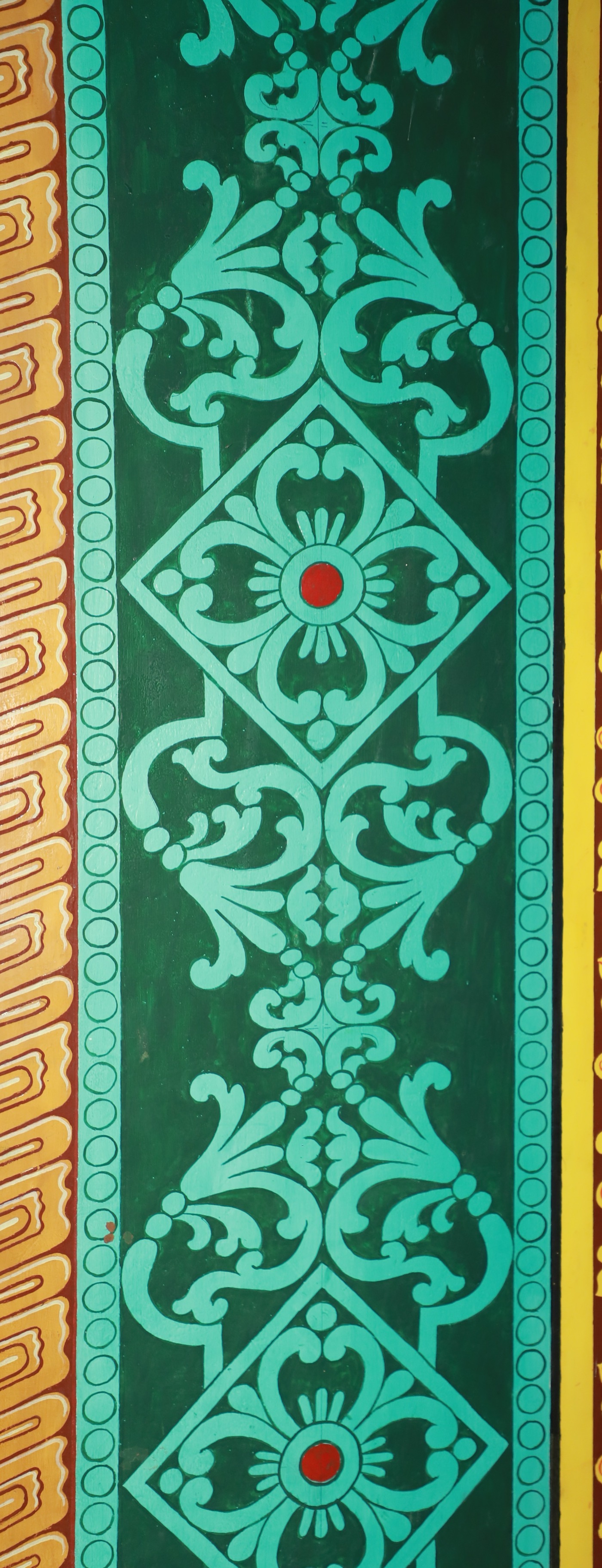
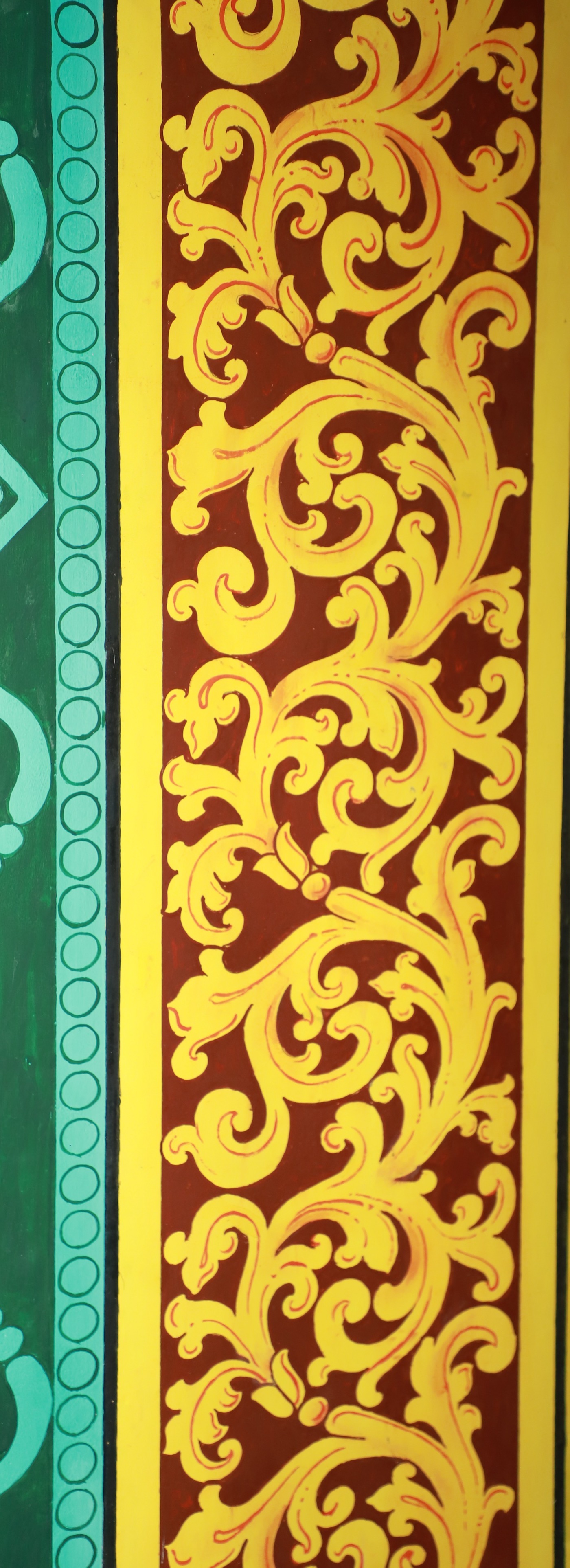
Liyavel and Ornamental Motifs

47

Liyavel and Ornamental Motifs

6 images

The liyavel vines, lotus blossoms, floral sprays, cloud bands and geometric patterns that adorn the shrine's doors, pillars, ceilings and walls are far more than decoration. The endless vine speaks of life's unbroken journey; the lotus of purity and awakening; the geometric orders of discipline and balance. In them lives the heritage of Sri Lankan art from Anuradhapura to Kandy.